

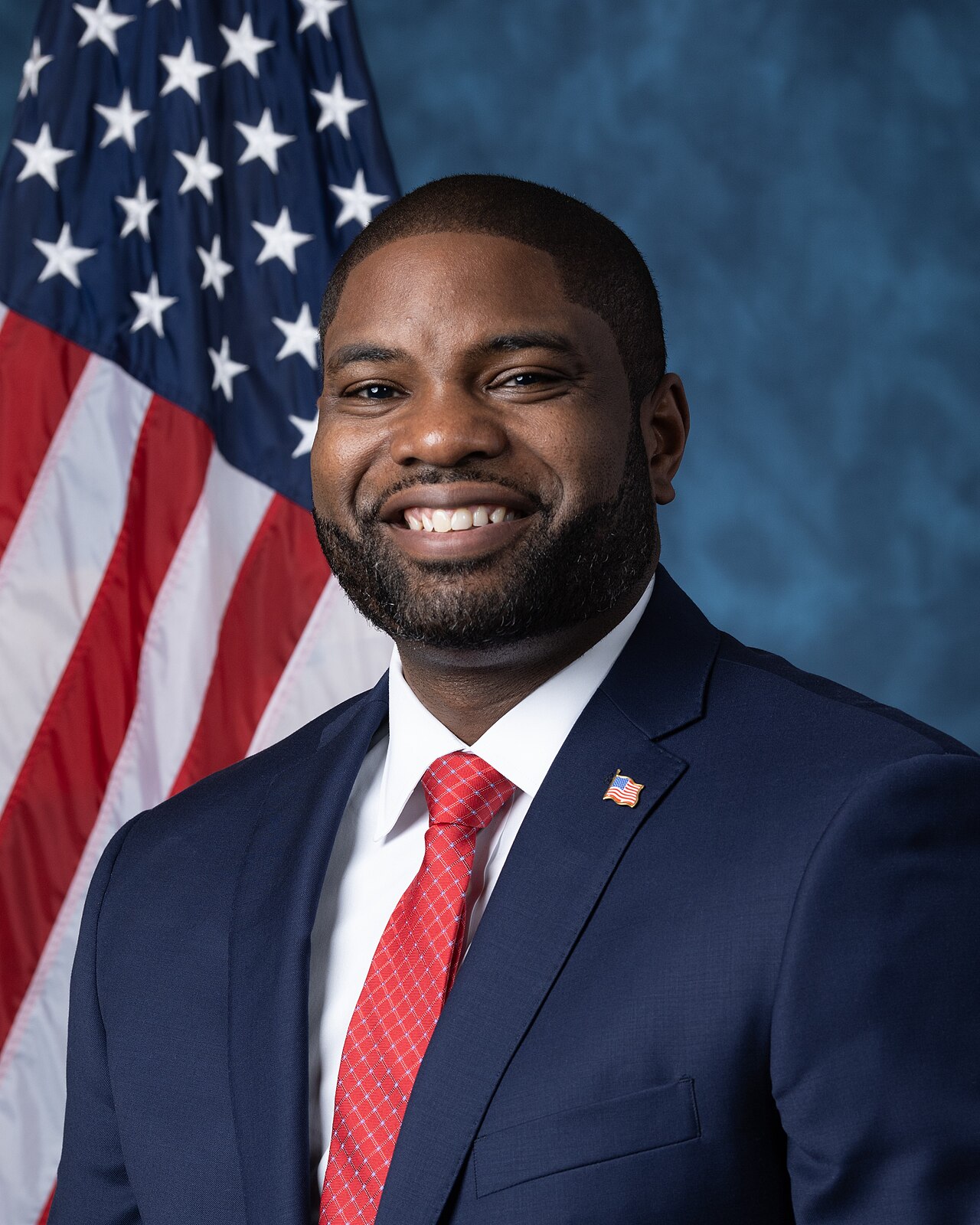
Republican Congressman Byron Donalds has won the race to become Florida’s next governor, defeating Democrat David Jolly in a much closer contest than expected. The Associated Press called the race for Donalds at 9:09pm Eastern time on Tuesday, according to Newsweek.
Donalds, who succeeds the term-limited Ron DeSantis, will be Florida’s first Black governor. CBS Miami reported that he will also be the first Black Republican elected governor in US history. Only three Black governors had previously been elected anywhere in the country, all of them Democrats.
A narrow win in a Republican stronghold
According to Newsweek, Donalds took 50.1% of the vote to Jolly’s 48.7%, a margin of about 1.4 percentage points. WUSF similarly reported a lead of about 1.5 points with most votes counted.
That margin is striking in a state that has moved sharply to the right. DeSantis won re-election in 2022 by more than 19 points, and Donald Trump carried Florida by about 13 points in 2024. Pre-election polls had Donalds ahead by around four points.
The win extends the Republican Party’s 28-year hold on Florida’s governorship, WUSF noted. Florida has not elected a Democratic governor since Lawton Chiles in 1994. On the same night, Republican Ashley Moody won her US Senate race in the state.
Who is Byron Donalds?
Donalds has represented Florida’s 19th Congressional District, covering Naples, Fort Myers and much of south-west Florida, since 2021. Before that he served in the Florida House of Representatives from 2016 to 2020. He is a member of the conservative House Freedom Caucus and was endorsed by President Trump early in the race. DeSantis endorsed him after he won the August Republican primary with nearly 48% of the vote.
His running mate, Bryan Avila, a former state senator from Miami, will become lieutenant governor.
Jolly, his opponent, is a former Republican congressman who left the party, became an independent and then ran as a Democrat, with former congresswoman Gwen Graham as his running mate.
What Donalds promised
The campaign was dominated by the cost of living in Florida, especially property taxes and soaring home insurance premiums. According to CBS Miami and WUSF, Donalds pledged to:
- Cut property taxes, including a push to eliminate homestead property taxes.
- Remove some surcharges on insurance premiums and speed up development permits.
- Expand school choice.
- Continue strong immigration enforcement and many DeSantis-era policies.
- Increase transparency in government spending.
The two candidates also clashed over AI data centres. Jolly proposed a one-year pause on new facilities, while Donalds argued that local communities should decide and that developers should cover utility costs, Newsweek reported.
The effects: what his win means
For Republicans, Florida was one of the few bright spots on a night when Democrats took control of Congress and won governorships in Texas and Ohio. Keeping the third most populous state gives the party a powerful base heading into the 2028 presidential election.
Donalds’ win is also historic for Black Americans and for the Republican Party, which has struggled to attract Black voters. He had set a goal of winning more than 20% of Florida’s Black vote.
But the narrow margin is a warning sign for the GOP. A swing of roughly 18 points from DeSantis’s 2022 result suggests voters, even in Florida, were unhappy about living costs and the direction of national politics.
For Florida’s large immigrant population, including Nigerians and other Africans in Miami, Orlando, Tampa and Jacksonville, Donalds’ promise to keep tough immigration enforcement means state policies introduced under DeSantis are likely to continue.
What happens next
Donalds will take office on January 5, 2027, according to WUSF. He will work with a Republican-controlled Florida Legislature, which should make it easier to pass his property tax and insurance plans.
Sources: CBS Miami, Newsweek, WUSF, Associated Press, Wikipedia.