

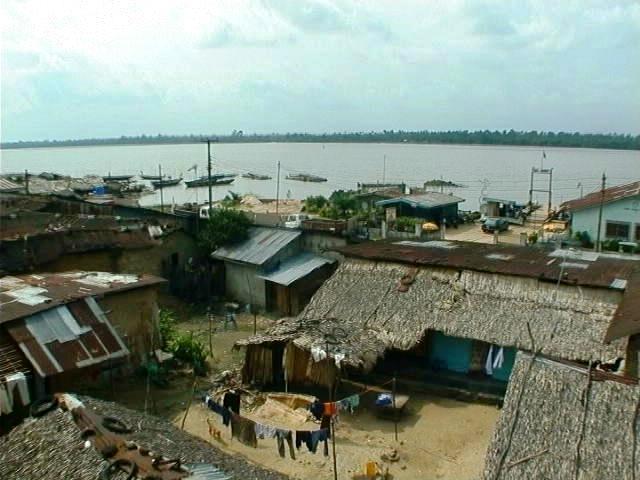
Construction has formally begun on the Bakassi Deep Seaport in Cross River State, one of Nigeria’s most talked-about but long-stalled infrastructure projects. President Bola Tinubu, represented by Vice-President Kashim Shettima, performed the groundbreaking on Friday, 13 November, at Ikang in Bakassi Local Government Area, according to reports by The Guardian, Tribune and the state-owned Voice of Nigeria.
The port is valued at about $3.5 billion and is being developed as a public-private partnership. Federal and state officials presented it as a turning point for the country’s maritime economy, which has for decades been concentrated around the Lagos ports.
What was launched in Bakassi
According to BusinessDay and the shipping publication Splash247, the port is designed with a 20-metre draft, deep enough to receive large vessels that currently avoid Nigerian waters or have to offload elsewhere. It is to be linked to a planned 260-kilometre superhighway that will serve as an evacuation corridor, moving cargo inland to the North, East and West of the country.
In a statement issued through the Office of the Vice-President, Tinubu described the port as a national project and credited Governor Bassey Otu with reviving it. According to The Guardian, the President framed the event as the end of a long delay rather than a ceremonial launch, saying the government had come to “break ground and break a centuries-old jinx.”
Shettima, speaking in his own capacity, told the audience that the seaport alone would secure Governor Otu’s place in Nigerian history, The Guardian reported.
Who is paying for it
Financing remains the key question for observers. Governor Otu said at the ceremony that environmental assessments, hydrographic and geotechnical surveys and the necessary federal approvals had all been completed, Splash247 reported. He added that an initial funding approval of $2.27 billion had been obtained, while work on a fuller $3.5 billion financing package with the African Export-Import Bank (Afreximbank) was continuing.
Afreximbank, represented at the event by Executive Vice-President Kanayo Awani on behalf of its president, George Elombi, described the groundbreaking as the moment the project moved from planning to execution, The Guardian said. The bank linked the port to trade under the African Continental Free Trade Area (AfCFTA).
The Cross River government first announced Afreximbank backing for the project in May 2024. In February 2025 it signed an agreement with the UAE-based ARISE Integrated Industrial Platform, which was reported at the time to hold an 80 per cent stake in the project.
Why the port matters
The Managing Director of the Nigerian Ports Authority (NPA), Abubakar Dantsoho, said the port could open up trade between Nigeria and landlocked countries such as Chad, Niger, Mali and Burkina Faso, according to BusinessDay. He also pledged the NPA’s cooperation with the state government, private investors and technical partners to deliver the project.
Supporters argue that a deep-water port in the South-South would reduce congestion at Apapa and Tin Can Island in Lagos, cut the cost of moving goods to the eastern half of the country and give the Calabar and Bakassi axis a new economic base. The area has struggled economically since the Bakassi peninsula was ceded to Cameroon following the 2002 International Court of Justice ruling, a loss the President alluded to in his remarks.
A project 12 years in the making
The Bakassi Deep Seaport was first conceived in 2014, and its Environmental and Social Impact Assessment was prepared in 2015. The project then went through approvals by the Infrastructure Concession Regulatory Commission (ICRC) and the Federal Ministry of Transportation, but stalled for years. Governor Otu said it had been held back by political, administrative, legal and environmental obstacles before the current administration took office.
Nigeria has seen similar announcements before. The Lekki Deep Sea Port in Lagos, which began operations in 2023, took more than a decade to move from concept to completion, while other proposed deep-sea ports, including Badagry and Ibom, remain at various stages of planning.
What happens next
No completion date was announced at the groundbreaking in the reports reviewed by Flashinfong. The next milestones to watch are the closing of the full Afreximbank financing, the appointment of the main construction contractors, and progress on the 260-kilometre road corridor, without which the port would struggle to move cargo inland.
The launch also comes in a charged political season ahead of the 2027 general elections, and both supporters and critics will be watching whether work on site continues at pace after the ceremony.
Sources: The Guardian Nigeria, BusinessDay, Tribune Online, Voice of Nigeria, TVC News, Splash247.