

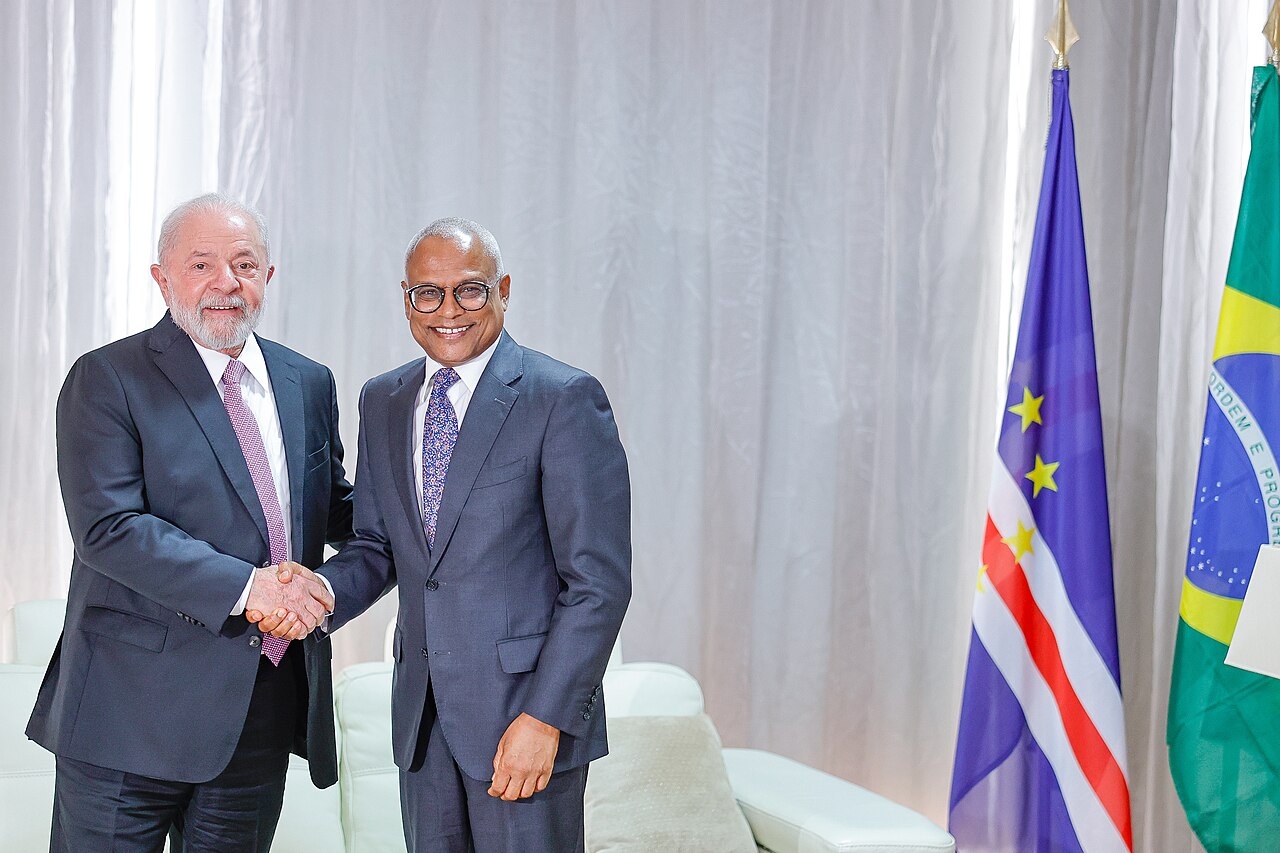
Cape Verde’s President José Maria Neves has won a second five-year term, securing close to 64 per cent of the vote in Sunday’s presidential election, according to provisional results from the island nation’s electoral authorities. His win in the first round means the West African archipelago will not need the run-off that had been pencilled in for 29 November.
The vote was another orderly contest in a country often held up as one of Africa’s most stable democracies, but it was marked by very low participation, with roughly two in every three registered voters staying away from the polls.
How the Votes Were Shared
With results in from 1,244 of the country’s 1,296 polling stations, Neves had received 79,945 votes, or 63.8 per cent, Anadolu Agency reported. His main challenger, former justice minister Joana Rosa, had 39,544 votes, or 31.6 per cent. AFP also put the President’s share at 63.8 per cent.
Six candidates were on the ballot. The other four each received less than 2 per cent, according to Anadolu. Europa Press, with about 97 per cent of ballots counted, reported similar figures, saying Neves had more than double his nearest rival’s total.
Final official results are still to be confirmed by the electoral authorities, but the margin is wide enough that the outcome is not in doubt.
Low Turnout Clouds the Victory
The official results portal showed about 129,000 people voting out of just over 400,000 registered voters included in the figures displayed, a turnout of around 32 per cent, according to Anadolu. AFP said nearly 420,000 people were eligible to vote in all. In 2021, when Neves was first elected, turnout was close to 48 per cent.
Neves acknowledged the problem after the results came in. According to Europa Press, he said he felt fully able to carry out his role as head of state despite the high abstention rate, and proposed a study of why so many people stayed home, along with a look at electronic voting to boost participation.
About 150 observers from the Economic Community of West African States (ECOWAS), the African Union and the European Union monitored the vote, AFP reported.
Who Are Neves and Rosa?
Neves, 66, is one of Cape Verde’s most experienced politicians. He served as prime minister from 2001 to 2016 and was elected president in 2021 with about 52 per cent of the vote, defeating Carlos Veiga. He is backed by the African Party for the Independence of Cape Verde (PAICV), which won parliamentary elections in May. The PAICV’s leader, Francisco Carvalho, became prime minister in June.
Rosa, backed by the opposition Movement for Democracy (MpD), made history as the first woman to run for president since Cape Verde gained independence from Portugal in 1975. A lawyer from the island of Maio, she served as justice minister from 2021 until this year and previously led the MpD in parliament.
What the Presidency Means in Cape Verde
Cape Verde has a semi-presidential system in which day-to-day government is led by the prime minister. The president does not run the government but acts as an arbiter, guarding national unity and the constitution, appointing the prime minister based on parliamentary election results and representing the country abroad, AFP noted.
The country ranks third out of 54 African nations in the 2026 Ibrahim Index of African Governance, according to AFP. Voters’ main worries include the rising cost of living, fuel prices and youth unemployment.
What Happens Next
With his own PAICV now also in charge of government, Neves begins his second and final term with an unusually aligned political landscape, since presidents are limited to two terms. That could make cooperation between the presidency and the government smoother, but it also puts pressure on the ruling party to deliver on economic concerns.
For Nigeria and the rest of ECOWAS, the result offers a contrast with tensions elsewhere in the region: a peaceful vote, a clear result and a smooth path to the next term. The challenge for Praia will be to win back the voters who chose to sit this one out.
Sources: AFP (via Yahoo News), Anadolu Agency, Europa Press, Morning Star.