

Nigeria’s long-running push for state police took another major step on Wednesday when the constitutional amendment bill that allows states to set up their own police services was formally handed to President Bola Tinubu. The Presidency says the President will study the bill with the Attorney-General of the Federation before signing it into law at a formal ceremony. No date has been announced yet.
The development comes two days after the Clerk to the National Assembly confirmed that all 36 State Houses of Assembly had endorsed the amendment, a result Flashinfong reported on Tuesday.
How the bill got to the President
In a statement on Wednesday, the Chief of Staff to the President, Femi Gbajabiamila, said the Constitution (Sixth Alteration) Bill was delivered to President Tinubu by his Special Advisers on Senate and House of Representatives Matters, Senator Basheer Lado and Dr Wasiu Olanrewaju-Smart, according to reports by Channels Television, Premium Times and BusinessDay.
Earlier the same day, the Senate passed a resolution directing the Clerk to the National Assembly, Kamoru Ogunlana, to transmit the bill to the President for assent. The motion was moved by the Senate Leader, Opeyemi Bamidele, Channels TV reported.
Mr Ogunlana had announced on Monday that every one of the 36 state assemblies had voted for the amendment. Under Section 9(2) of the 1999 Constitution, an alteration of this kind needs the backing of at least two-thirds of the states, which means 24. Gbajabiamila noted that the unanimous approval went well beyond that requirement, according to BusinessDay and TheGuildNG.
What happens before Tinubu signs
Gbajabiamila said the President would review the bill in consultation with the Attorney-General of the Federation, Lateef Fagbemi (SAN), and would then assent to it at a formal signing ceremony, Tribune and P.M. News reported. The statement also carried the President’s thanks to the leadership of the Senate and House of Representatives, the 36 governors, the state assemblies and Nigerians who supported the measure.
Tinubu has repeatedly said he supports state police as part of his response to insecurity, and the Presidency’s statement signals that assent is expected rather than in doubt. However, no timetable has been given for the ceremony.
A second law is still needed
Changing the Constitution only creates the legal foundation. The rules for how state police forces will be recruited, funded, supervised and held accountable will be set out in a separate piece of legislation, the proposed National Policing Bill.
Gbajabiamila, who chairs the Presidential Working Group on State Police, said the group, supported by a Policy Advisory Committee, has finished nationwide consultations with stakeholders and produced a draft of that bill. The draft has been sent to the Federal Ministry of Justice for legislative drafting validation, according to BusinessDay and Vanguard. Once the validated version comes back, the working group will review it and present it, together with its report, to the President.
Vanguard reported that the National Assembly also asked the President to send it a bill on operational guidelines for state police, so that lawmakers can pass it alongside the constitutional change.
Why this matters
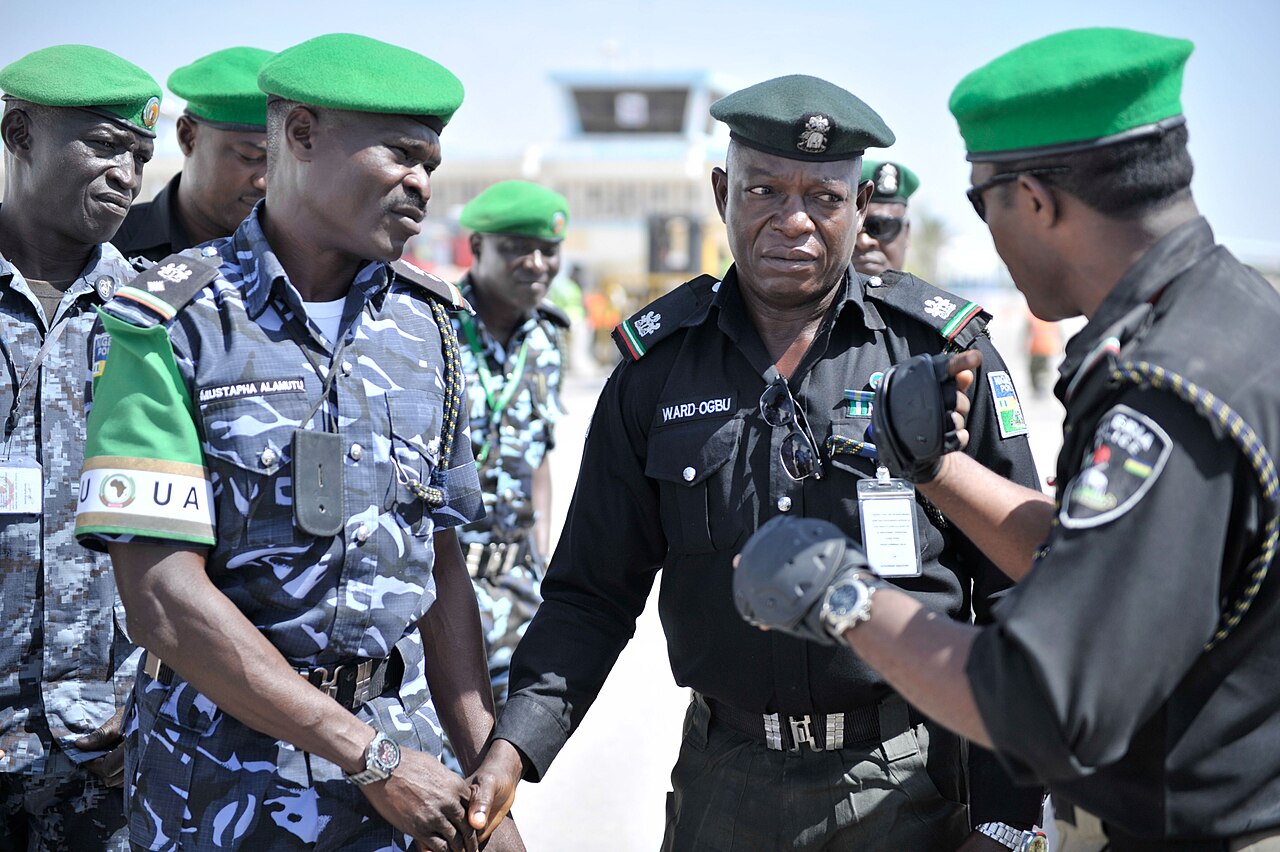
Since 1999, policing has sat on the Exclusive Legislative List, meaning only the Federal Government can run a police force. The Nigeria Police Force, headed by the Inspector-General in Abuja, is the single national force for a country of more than 200 million people. Governors have long argued that they are called “chief security officers” of their states without control over the police, and many have set up regional or state security outfits such as Amotekun in the South-West to fill the gap.
Supporters of state police say locally recruited officers who know their communities can respond faster to kidnapping, banditry and farmer-herder violence. Critics have warned that governors could use state forces against political opponents, especially with the 2027 elections approaching, and that many states may struggle to pay and equip their own officers. How the National Policing Bill handles oversight, funding and the relationship with the federal force is likely to decide whether those fears are addressed.
What to watch next
- The date of the formal signing ceremony at the Presidential Villa.
- The Justice Ministry’s validation of the draft National Policing Bill and its transmission to the National Assembly.
- How quickly states move to create the laws and institutions needed for their own police services once the framework is in place.
Sources: Channels Television, Premium Times, BusinessDay, Tribune, Vanguard, P.M. News, TheWill, TheGuildNG.