

Powerful waves have been battering the California coast since late last week, flooding streets and beachfront homes, prompting evacuation warnings and forcing the closure of some of the state’s best-known piers. Forecasters say more dangerous surf and two storms are on the way this week, with a strong El Niño making coastal flooding worse.
Record-breaking waves
On Friday night, 13 November, a NOAA buoy near Monterey recorded a 34.1-foot (10.4-metre) wave, the highest reading there in 30 years, according to AccuWeather. A buoy off Point Reyes measured 31.2 feet, its highest since 2015. The waves were so strong that seismographs in the San Francisco Bay Area picked up the vibrations.
The Associated Press reported that waves of more than 50 feet were recorded in San Mateo County on Saturday, and the National Weather Service (NWS) warned that breaking surf of up to 35 feet was possible in the Bay Area.
Streets flooded, piers shut
In Pacifica, south of San Francisco, waves broke over the Beach Boulevard seawall and flooded parking lots, sidewalks and streets, The Watchers and ABC7 San Francisco reported. One wave crashed over a fence where people were watching, soaking spectators and knocking one person down, according to AccuWeather.
In Santa Cruz County, the sheriff’s office issued evacuation warnings for low-lying areas around Capitola and Aptos, and the city closed its beaches and wharf. Further south, several inches of water covered the strand in Seal Beach and flooded beachfront homes, while at La Jolla Cove near San Diego, water poured over the beach and up a staircase, the AP reported.
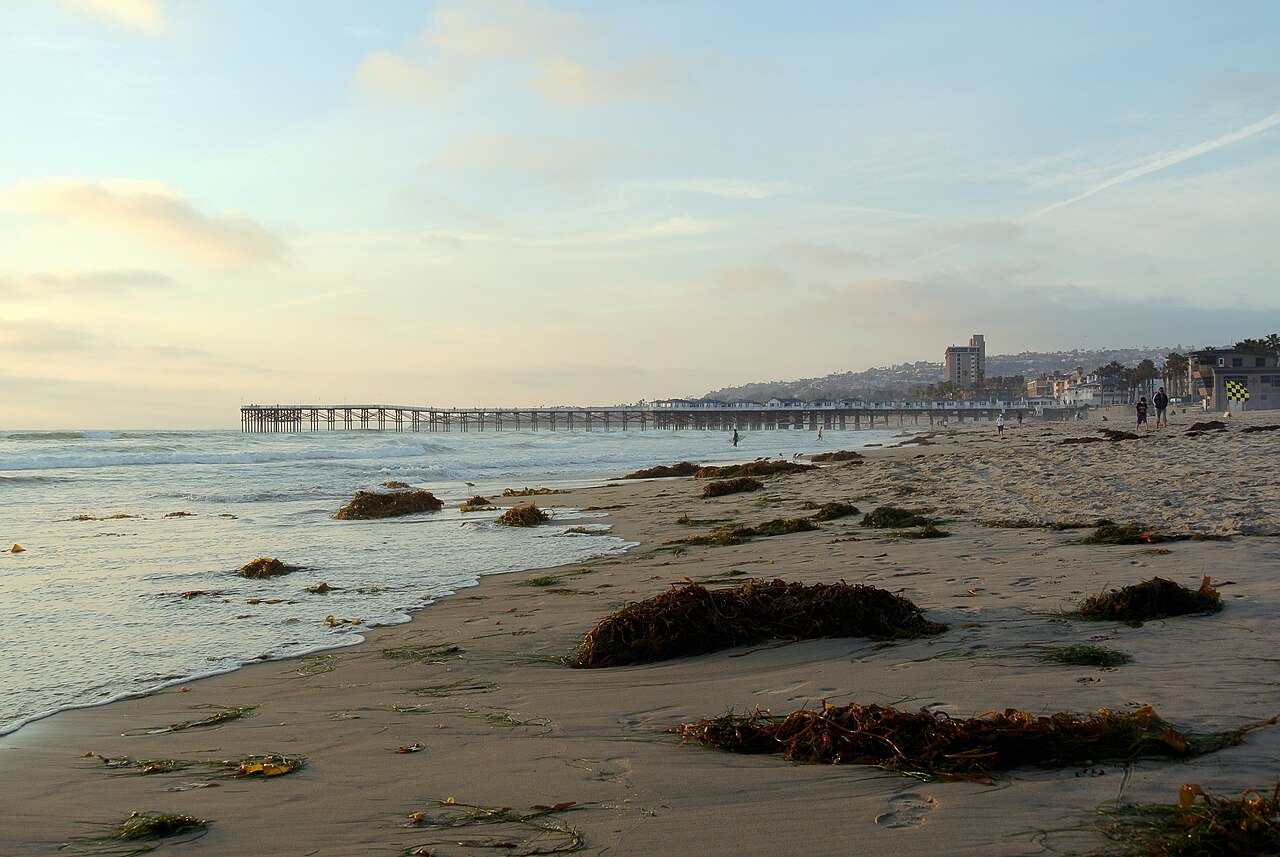
Piers in Ventura, Manhattan Beach, Huntington Beach and San Diego’s Pacific Beach were closed over the weekend. California State Parks also shut several beaches in the Monterey area.
On Monday, ABC7 San Francisco reported waterspouts spotted off San Francisco and a tornado warning issued for Santa Cruz County as stormy weather moved in.
The El Niño factor
Scientists say the ongoing strong El Niño has warmed the Pacific Ocean, causing seawater to expand and raising sea levels along the coast by several inches for weeks. That means big waves can reach further inland than usual. According to The Watchers, record water levels were measured at San Diego, La Jolla, Los Angeles and Santa Barbara in late October, and Huntington Beach declared an emergency at the time.
Experts warn that back-to-back storms are especially damaging because beaches have no time to recover in between.
What happens next
High surf advisories remain in place along much of the coast from San Francisco to San Diego into Tuesday and, in parts of Southern California, Wednesday. Forecasters expect more strong swells through the week, with larger surf possible on Thursday and Friday.
Two storms and an atmospheric river are forecast to bring heavy rain and flood risk from late Tuesday into Thursday. AccuWeather meteorologist Alyssa Glenny warned that rip currents and sneaker waves “pose a life-threatening risk”.
The NWS has urged people to stay out of the water, keep off rocks and jetties, and “never turn your back on the ocean”.
Sources: Associated Press (via ABC7 San Francisco), AccuWeather, The Watchers, NBC News, National Weather Service.