


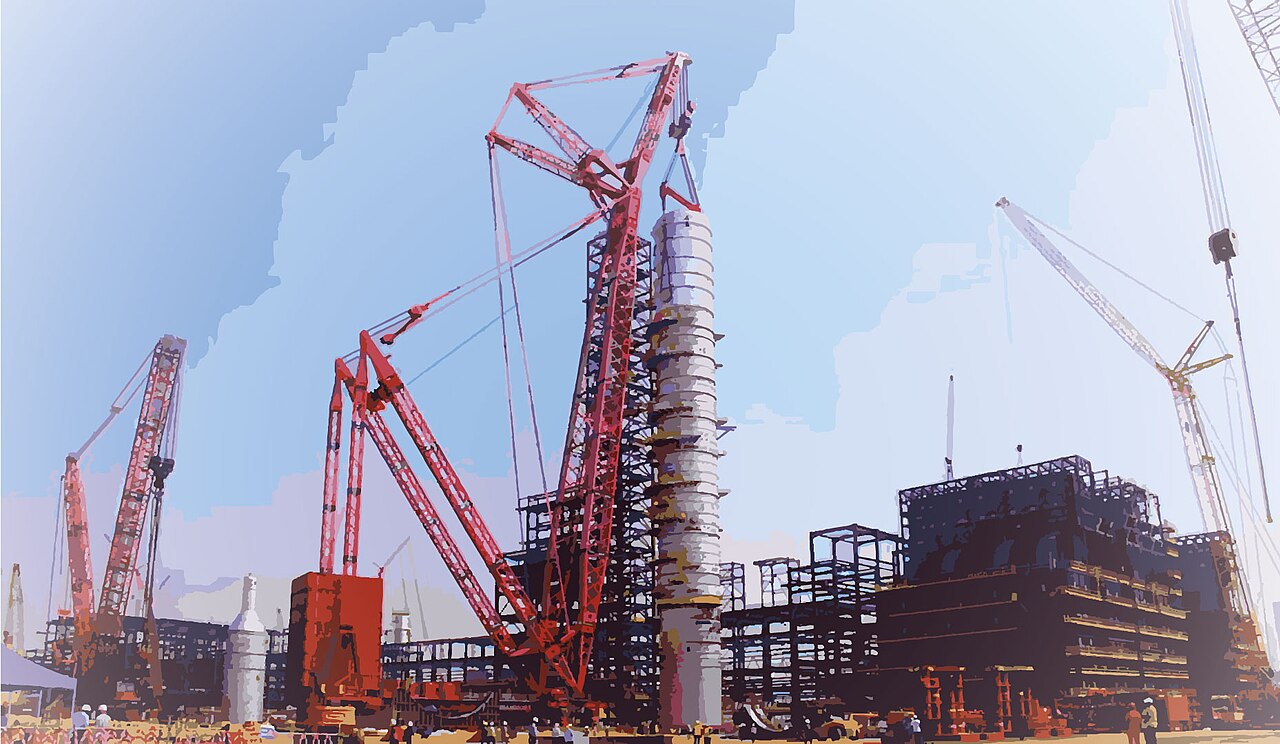
Dangote Petroleum Refinery has reduced the price at which it sells petrol from its gate in Lekki, Lagos, by N51 per litre, the latest in a run of price changes that has kept Nigeria’s fuel market on edge throughout November.
According to market surveys reported on Monday by P.M. News and Legit.ng, the refinery’s gantry price for Premium Motor Spirit (PMS), commonly called petrol, fell from N1,210 to N1,159 per litre. That is a cut of about 4.2 per cent. The gantry price is what marketers pay to load petrol directly at the refinery, before transport costs and retail margins are added, so it is not the price motorists pay at filling stations.
What has changed
The new rate comes days after other parts of the supply chain started moving prices down. BusinessDay reported on 12 November that the consortium of marketers that distributes the refinery’s petrol cut its own gantry price by N25 to N1,215 per litre. The refinery had also trimmed that consortium to 25 members from 37, the paper said, citing energy research firm Petroleumprice.ng, following concerns over how some members were pricing the product.
After the consortium’s cut, MRS filling stations lowered their pump price to N1,399 per litre, according to P.M. News. Legit.ng reported that depot prices have also fallen in Lagos, Port Harcourt, Calabar and Warri, and that NNPC, MRS, AP and other retailers have reduced pump prices by between N9 and N80 per litre in under two weeks.
Even so, retail prices remain well above the refinery’s new gantry rate. P.M. News put current pump prices at between roughly N1,325 and N1,420 per litre in different parts of the country.
Why prices are falling
The main driver is the drop in global crude prices. BusinessDay noted last week that Brent, the benchmark for Nigerian crude, had fallen below $100 a barrel, and industry players expect the decline to filter into the downstream market. Legit.ng reported that the International Energy Agency is now projecting a global oil supply surplus in the fourth quarter of 2026, which would add further downward pressure.
Competition from imports is another factor. P.M. News reported that the landing cost of imported petrol is about N1,063 per litre, which is below Dangote’s new gantry price. That gap gives importers and depot owners room to undercut the refinery, and it helps explain why some depots have been selling below Dangote’s rate at several points this month.
A volatile month for petrol pricing
The latest cut follows several swings in a short period. In early November the refinery’s gantry price moved between about N1,210 and N1,300 per litre. Legit.ng and The News Chronicle reported that the refinery raised its price to N1,300 per litre from midnight on 3 November, as it prepared to operate under a new fixed-naira pricing arrangement and briefly suspended loading. Prices later came back down.
Over a longer period the trend has been clearly downward. According to Legit.ng, the gantry price stood at about N1,350 per litre in mid-September, meaning the refinery’s rate has fallen by close to N200 per litre in roughly two months.
The Lekki refinery, which reports put at about 700,000 barrels per day, has become the main price-setter in Nigeria’s deregulated downstream sector since it began supplying the local market in 2024. Its price moves are now closely watched by marketers, transporters and households alike.
What it means for motorists and the economy
For motorists, the key question is how quickly filling stations pass on the cut. Retailers usually adjust once they have bought new stock at the lower price, so any relief tends to arrive over days rather than hours, and it varies by location and by marketer.
The wider economy also has a stake. Transport and energy costs feed into food prices and general inflation. Data released by the National Bureau of Statistics this week showed headline inflation easing to 14.06 per cent in October, while food inflation stayed above 19 per cent. Cheaper petrol, if it is sustained and passed through to pump prices, could help ease transport costs and support that trend.
What happens next
Analysts expect further pump price reductions in the coming days as marketers restock at the new rate. However, the direction of prices will continue to depend on global crude prices, the exchange rate and competition between locally refined and imported fuel. Given how often the gantry price has changed this month, motorists should expect more adjustments, up or down, before the end of the year.
Sources: P.M. News, Legit.ng, BusinessDay, The News Chronicle.