


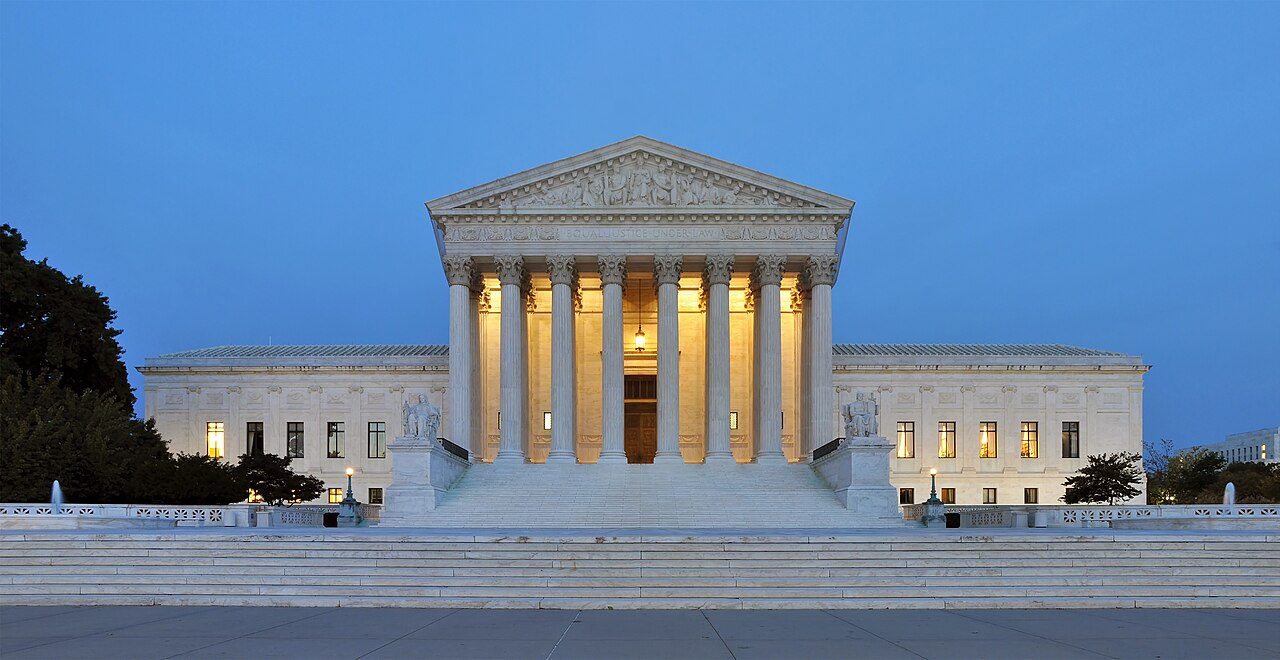
A group of Democratic US senators has asked the Supreme Court to uphold a lower-court ruling that the Trump administration’s policy of deporting migrants to countries other than their own is unlawful. The policy has seen people sent to at least 12 African countries, according to Human Rights Watch, and the case will be argued before the justices on 9 December.
The amicus (friend-of-the-court) brief was led by Senator Jeanne Shaheen, the top Democrat on the Senate Foreign Relations Committee, and Senator Dick Durbin, the top Democrat on the Senate Judiciary Committee, the committee said in a statement on Tuesday.
What the senators are asking for
The senators are backing the migrants who brought the case, known as D.V.D. v. DHS, and want the Supreme Court to affirm a decision by the US Court of Appeals for the First Circuit that largely upheld limits on the policy.
According to the Senate Foreign Relations Committee, the brief argues that the policy breaks protections Congress wrote into the Immigration and Nationality Act and the Foreign Affairs Reform and Restructuring Act of 1998. Those laws, the senators say, require officials to decide case by case whether a person faces persecution or torture in the country they are being sent to.
The brief also challenges the government’s reliance on broad diplomatic assurances from receiving countries. Drawing on a February 2026 investigation by Foreign Relations Committee Democrats, the senators say the State Department did not properly check whether those promises were kept, and that US officials were told not to engage with migrants once they had been handed over, OkayAfrica reported. In their words, the policy turns a rarely used tool into “a standing system of unchecked global removals.”
Other signatories include Senators Gary Peters, Chris Coons, Richard Blumenthal, Mazie Hirono, Tim Kaine, Chris Van Hollen, Jacky Rosen, Alex Padilla and Adam Schiff.
Africa at the centre of the dispute
Human Rights Watch has documented deportations of third-country nationals from the US to at least 12 African countries: Ghana, Cameroon, the Central African Republic, South Sudan, Sierra Leone, Uganda, Rwanda, Liberia, DR Congo, Eswatini, Burundi and Equatorial Guinea. OkayAfrica, citing the group’s research, reported that the wider network covers 15 African countries, including three where transfers have not been publicly confirmed.
The rights group says it has recorded cases of detention, ill-treatment and onward deportation to countries where migrants could face persecution. Other groups have also filed briefs. The NAACP Legal Defense Fund argues that the policy falls hardest on Black migrants and other people of colour, while the American Immigration Council and the American Immigration Lawyers Association say some people get little or no notice before removal.
The issue has already touched African governments directly. Several have faced questions at home over why they agreed to receive non-citizens deported from the US, and the case of Kilmar Abrego Garcia, whom officials tried to send to Uganda, Eswatini, Ghana and Liberia before he left for Spain this week, drew global attention to the practice.
How the case got here
A federal judge in Massachusetts, Brian Murphy, had ordered that migrants be given a real chance to raise fears of torture before being sent to a third country. The Trump administration went to the Supreme Court several times to lift his orders. In late September, the court allowed the deportations to resume while it considers the case, with the three liberal justices dissenting, NPR and SCOTUSblog reported.
The administration says third-country removals are needed because some home countries refuse to take back their citizens. Solicitor General John Sauer has told the court the policy is an essential tool for removing some of the most serious offenders.
What it means for Nigerians and other Africans in the US
Nigeria is not on Human Rights Watch’s list of receiving countries, but the outcome will matter to Nigerians and other Africans facing removal in the US. A ruling for the government could make it easier for officials to send people to countries where they have no ties, with limited notice. A ruling for the migrants would restore stronger case-by-case checks. The issue comes as US authorities step up enforcement, including adding Nigerians to a Department of Homeland Security register of deportation targets this week.
What happens next
The Supreme Court will hear oral arguments on 9 December 2026. A decision is expected sometime next year. Until then, the government can continue third-country removals under the court’s earlier order.
Sources: US Senate Foreign Relations Committee, OkayAfrica, Human Rights Watch, SCOTUSblog, NPR, France 24, American Immigration Council, NAACP Legal Defense Fund.