

At least seven people were killed and around 125 injured when two passenger trains collided in the El Ayyat district of Egypt’s Giza Governorate on Sunday, 8 November, in the country’s latest deadly rail accident.
The crash happened on the main line south of Cairo, about 50 kilometres from the capital, and halted services between Giza and Upper Egypt while emergency crews cleared derailed carriages from the track.
How the collision happened
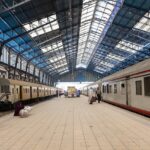
According to the Egyptian National Railways, as reported by Egyptian Streets, Train No. 134, a Giza-to-Fayoum service, ran into the back of Train No. 2010, a Cairo-to-Aswan service that was standing still on the same track. The collision took place between the Kafr Ammar and Al-Raqqa stations.
Several carriages left the rails, and China Daily reported that some fell down an embankment beside the line. CBS News said an initial inspection found the moving train struck the last carriage of the stationary one. Why the second train failed to stop has not yet been explained.
Death toll and injuries
The casualty figures rose through the day. The Health Ministry first reported four dead and 88 injured, according to CBS News and Egyptian Streets, before raising the death toll to at least seven. A train driver was among those killed, CBS reported.
Estimates of the injured have varied between outlets. ABC News (Australia) reported more than 110 injured, while China Daily, citing later health figures, put the number at 125, with 45 people discharged after treatment. Wikipedia’s entry on the crash, citing official figures, also lists about 125 injured, with 12 in an unstable condition.
Health Minister Khaled Abdel-Ghaffar placed hospitals in Giza and neighbouring Beni Suef on alert to receive the wounded.
Government response and investigation
President Abdel Fattah el-Sisi offered condolences to the families of the dead and directed state agencies to provide full medical care for the injured and to investigate the crash, saying anyone found negligent would be held to account, according to several outlets. Prime Minister Mostafa Madbouly also followed up on the treatment of the wounded.
Public prosecutors inspected the site and asked the railway authority to form a specialised technical committee to determine what caused the derailment, Egyptian Streets reported.
The Egyptian National Railways sent cranes and emergency teams to clear the line, and the Transport Ministry laid on buses to carry stranded passengers around the crash site. China Daily and Wikipedia noted calls on social media for Transport Minister Kamel al-Wazir to resign, though no resignation has been reported.
A troubled rail network
Egypt’s rail network, one of the oldest in Africa and the Middle East, carries hundreds of thousands of passengers a day, but it has a long record of fatal accidents blamed on ageing equipment, poor maintenance and human error.
El Ayyat itself was the scene of the country’s deadliest rail disaster in February 2002, when a fire on a crowded Cairo-to-Luxor train killed more than 360 people. CBS News noted that two freight trains collided in the same district in September 2025, injuring two crew members.
The government has spent heavily in recent years on new carriages, signalling upgrades and electrification, but repeated crashes have kept rail safety high on the public agenda.
What happens next
The findings of the technical committee and the prosecution’s investigation are expected to determine whether the crash was caused by signalling failure, mechanical fault or driver error. Railway officials said they aimed to restore normal schedules on the Cairo-Aswan line as quickly as possible once the wreckage is cleared.
Sources: Egyptian Streets, CBS News, ABC News (Australia), China Daily, allAfrica.