
Saturday, November 14, 2026
Flashinfong
  • Home
  • News
  • Politics
  • Business
  • Economy
  • Diaspora
  • Sports
  • Entertainment
  • World
  • Health
  • Tech
  • Opinion
  • More
    • Breaking News
    • Lifestyle
    • Africa
    • Crime
    • Education
    • Science
    • Music
    • Travel
    • Apps
No Result
View All Result
Flashinfong
No Result
View All Result

Friday the 13th “Doomsday”: Why a 1960 Study Said the World Would End Today, and What the Population Numbers Really Show

Dibango by Dibango
November 13, 2026
in World
0
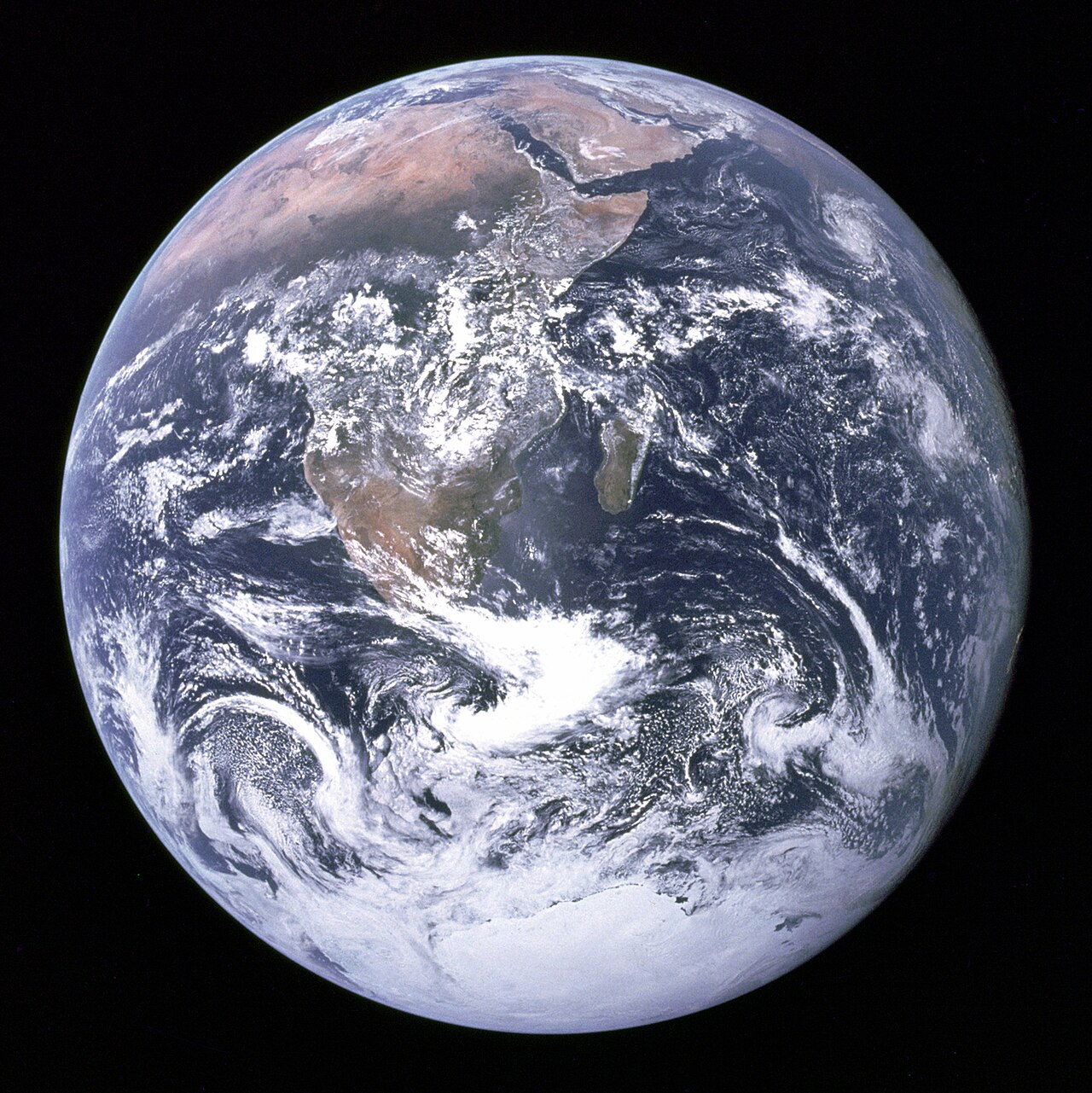
The Earth photographed from space by the Apollo 17 crew, showing Africa and Antarctica

The Earth seen from Apollo 17, 1972. Photo: NASA / Apollo 17 crew / Wikimedia Commons, public domain

0
SHARES
10
VIEWS
Share on FacebookShare on Twitter

If you woke up this morning, Friday, 13 November 2026, you have already outlived one of the most famous predictions in the history of science. More than six decades ago, three researchers at the University of Illinois calculated that this very date would mark “doomsday” for humanity. The date has arrived, the world is still turning, and the story behind the forecast has gone viral this week.

The prediction was never about asteroids, wars or a religious end of days. It was a mathematical warning about population growth, and understanding why it failed tells us a great deal about how the world, including fast-growing countries like Nigeria, has changed since 1960.

Table of Contents

Toggle
  • Where the “Doomsday” Date Came From
  • Why the Prediction Did Not Come True
  • What the Study Got Right
  • Why It Matters for Nigeria and Africa
  • So, Should You Be Worried Today?

Where the “Doomsday” Date Came From

In November 1960, physicist Heinz von Foerster and two colleagues, Patricia Mora and Lawrence Amiot, published a paper in the respected journal Science under the provocative title “Doomsday: Friday, 13 November, A.D. 2026”. According to Euronews, the team analysed estimates of world population stretching back about 2,000 years and fitted a growth curve to the figures.

What they noticed was that the time it took for humanity to double in number had been getting steadily shorter. When they extended that trend into the future, their equation showed the number of people shooting towards infinity in late 2026, which they pinned to this Friday. Swiss outlet Bluewin noted that the calculation actually gave a range of years rather than a single day, and the authors chose the dramatic date partly to grab attention.

Why the Prediction Did Not Come True

The model assumed that the speed-up in population growth seen up to 1958 would simply continue. It did not. Global population growth peaked in the 1960s and has slowed ever since, as death rates fell, education spread, more women entered the workforce and families in most regions chose to have fewer children.

Today there are roughly 8.3 billion people on Earth, according to figures cited by Bluewin. That is a lot more than the about 3 billion alive in 1960, but it is nowhere near infinity. Current United Nations projections, also cited in the reports, expect the global population to keep growing until around the 2080s, peaking at about 10.3 billion before it may begin to decline gradually.

In other words, the “doomsday equation” was a correct description of the past but a poor guide to the future. Scientists now see it as a classic example of the danger of extending a trend indefinitely without accounting for how societies respond to change.

What the Study Got Right

Even though the headline prediction failed, the paper is still discussed because it made a serious point in a memorable way. Euronews reported that the authors’ real aim was to show that unchecked growth cannot go on forever on a planet with limited space, food, water and energy.

That concern has not gone away. Debates over climate change, food security, urban overcrowding and pressure on public services are, in part, debates about how a larger population can be supported sustainably.

Why It Matters for Nigeria and Africa

While population growth has slowed sharply in Europe, East Asia and the Americas, sub-Saharan Africa is now where much of the world’s future growth is expected to happen. Nigeria, already Africa’s most populous country, is projected by the UN to remain one of the most populous nations on Earth through the rest of the century.

For policymakers in Abuja and across the continent, that means the real questions are not about doomsday but about planning: creating enough jobs for young people entering the labour market, expanding schools and hospitals, building housing, and growing enough food. Experts generally agree that investment in education, especially for girls, and in health care are among the most effective ways to manage growth while improving living standards.

So, Should You Be Worried Today?

No. Friday the 13th has a long reputation for bad luck in popular culture, and this one comes with an unusual scientific footnote, but no researcher today believes the world will end because of the 1960 calculation. If anything, the date is a useful reminder to look at population numbers carefully and to plan ahead rather than panic.

Sources: Euronews, Bluewin, Science (1960 paper by von Foerster, Mora and Amiot).

Tags: DoomsdayFreshFriday the 13thPopulation GrowthScienceWorld Population
Previous Post

One Year After CPC Redesignation, US Congress Holds Fresh Hearing on Killings of Christians in Nigeria’s Middle Belt

Next Post

FG Hands Port Harcourt Airport to Private Operator in 30-Year Concession, Eyes Benin and Yola Next

Next Post
View of Port Harcourt International Airport in Omagwa, Rivers State

FG Hands Port Harcourt Airport to Private Operator in 30-Year Concession, Eyes Benin and Yola Next

Leave a Reply Cancel reply

Your email address will not be published. Required fields are marked *

Latest News

  • Nigerian striker Tolu Arokodare
    Nigeria 3-1 Tanzania: Arokodare Comes Off the Bench to Score Twice as Super Eagles Revive AFCON 2027 Hopes in UyoNovember 14, 2026
  • Silverbird cinema building in Lagos, Nigeria
    Issakaba: The Return, Five Figurines and Dear Ajayi Open in Nigerian Cinemas as Nollywood’s Big November Weekend BeginsNovember 13, 2026
  • The headquarters of Nigeria's Independent National Electoral Commission (INEC) in Abuja
    2027: INEC Fixes November 28 for Nationwide Mock Presidential Election to Test BVAS and IReVNovember 13, 2026
  • View of Port Harcourt International Airport in Omagwa, Rivers State
    FG Hands Port Harcourt Airport to Private Operator in 30-Year Concession, Eyes Benin and Yola NextNovember 13, 2026
  • The Earth photographed from space by the Apollo 17 crew, showing Africa and Antarctica
    Friday the 13th “Doomsday”: Why a 1960 Study Said the World Would End Today, and What the Population Numbers Really ShowNovember 13, 2026
  • Official portrait of US Congressman Chris Smith of New Jersey, chairman of the House Africa Subcommittee
    One Year After CPC Redesignation, US Congress Holds Fresh Hearing on Killings of Christians in Nigeria’s Middle BeltNovember 13, 2026

Follow Flashinfong

Follow on FacebookFollow on XGet the Free Flashinfong App

Tags

2027 election 2027 elections Abuja ADC Africa afrobeats APC Arsenal artificial intelligence Atiku Abubakar Bola Tinubu Democrats Donald Trump Ebola Economy EFCC Elon Musk Eric Chelle FCT Fresh Gun violence Hope Uzodimma INEC Insecurity Joseph Utsev Lagos NDC New York NiDCOM Nigeria Nigerian Economy Nollywood Nvidia Nyesome Wike Obituary Peter Obi Rivers State South Africa Super Eagles Tanzania Tinubu Trump United States US Midterms 2026 Victor Osimhen
Flashinfong

Nigerian news, politics, business and diaspora stories, reported for readers at home and abroad.

  • About Us
  • Contact Us / Send a News Tip
  • Privacy Policy

Search

Send us a news tip →

News

  • Latest News
  • Breaking News
  • Politics
  • Business
  • Economy
  • World
  • Africa
  • Crime
  • Education
  • Opinion

Sections

  • Diaspora
  • Entertainment
  • Sports
  • Music
  • Lifestyle
  • Health
  • Travel
  • Tech
  • Science
  • Research
  • Home
  • About Us
  • Contact
  • Privacy Policy
  • Advertise With Us
  • Subscribe

© 2026 JNews - Premium WordPress news & magazine theme by Jegtheme.

No Result
View All Result
  • Home
  • News
  • Politics
  • Business
  • Economy
  • Diaspora
  • Sports
  • Entertainment
  • World
  • Health
  • Tech
  • Opinion
  • More
    • Breaking News
    • Lifestyle
    • Africa
    • Crime
    • Education
    • Science
    • Music
    • Travel
    • Apps

© 2026 JNews - Premium WordPress news & magazine theme by Jegtheme.