

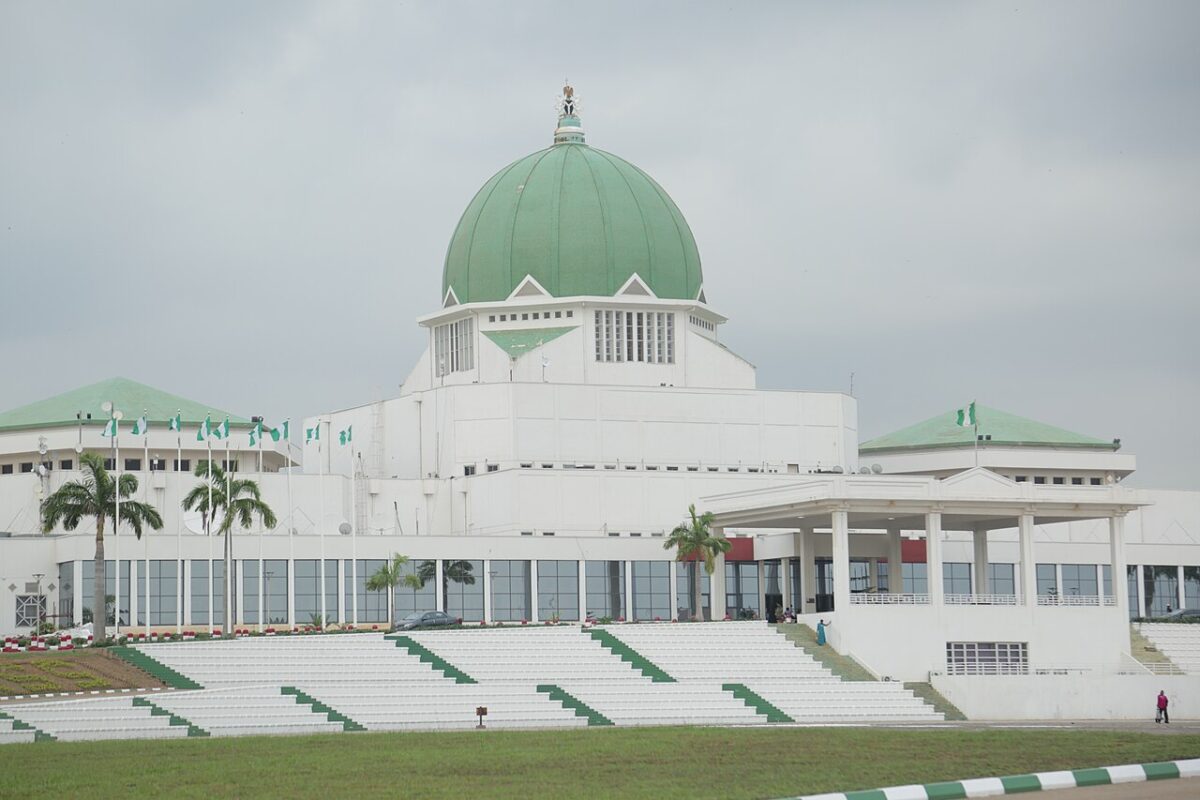
President Bola Tinubu has asked the Senate to approve fresh external borrowing of $7.7 billion, about N10.79 trillion, to help plug the deficit in Nigeria’s 2026 budget. The request, contained in a letter read on the floor of the Senate on Wednesday by Senate President Godswill Akpabio, is now before the chamber’s debt committee and has already drawn criticism from opposition figures, including former Vice President Atiku Abubakar.
According to Leadership and the News Agency of Nigeria (NAN), Akpabio told senators that the new letter effectively supersedes an earlier request for $20.3 billion, which Flashinfong reported last week as a $20.52bn and €1.045bn supplementary borrowing plan.
What the President is asking for
The letter, reportedly dated October 26, puts the exact figure at N10,790,366,835,481, converted at the budget exchange rate of N1,409 to the dollar. That works out to roughly $7.66 billion, which the Presidency rounds up to $7.7 billion.
According to the reports, the 2026 Appropriation Act provides for about N29.2 trillion in new borrowing to finance a deficit of around N31.4 trillion. Of that, N18.4 trillion is to be raised at home and N10.79 trillion abroad. The President cited Sections 21(1) and 27(1) of the Debt Management Office (Establishment, etc.) Act 2003, which require the terms of external loans to be laid before the National Assembly before the Finance Minister can obtain them.
The government says the money could come from one or a combination of sources: concessional and commercial loans from multilateral and bilateral lenders, the International Monetary Fund, bridge financing, direct borrowing from international financial institutions and Eurobonds. Eurobonds are to get “greater emphasis” because they can be concluded faster and raise larger sums, the letter said, according to NAN.
Where the money is meant to go
The funds are earmarked for defence and security, transportation, agriculture, power, education and health, according to the reports. New National Star said the letter also presents the borrowing as a way to consolidate economic reforms and strengthen macroeconomic stability.
Proceeds would be received by the Central Bank of Nigeria on behalf of the Federal Government, which the Presidency says would boost external reserves and support the naira. Final interest rates, tenors and repayment periods were not disclosed; the letter said they would depend on market conditions at the time of pricing, with the Finance Ministry and the DMO tasked with securing the best possible terms.
What the Senate did
The Senate did not vote on the request on Wednesday. Akpabio referred it to the Committee on Local and Foreign Debts, asking it to report back as soon as practicable. He described the new request as “more explicit” than the earlier one and said the borrowing would not necessarily come from a single source, but on a willing-seller, willing-buyer basis, according to Leadership.
New National Star reported that Akpabio also urged a “win-win” arrangement with lenders and warned against unfavourable obligations. No deadline was given for the committee’s report.
Atiku: “Nigeria cannot borrow its way out”
Atiku Abubakar, the presidential candidate of the African Democratic Congress (ADC), urged senators to subject the request to strict scrutiny. In a statement issued by Phrank Shaibu of his campaign council, reported by Tribune Online, he said: “Nigeria cannot borrow its way out of every budget shortfall.”
Atiku asked the government to disclose which projects the loans would fund, what they would cost, and the interest rates and repayment schedules involved. He called for a line-by-line review and a full project list before any approval, and appealed to lenders to demand transparency.
Background: rising debt concerns
The request comes amid an intense national debate about the size of Nigeria’s debt. Former President Olusegun Obasanjo recently criticised the government’s borrowing, and economists such as Stanbic IBTC founder Atedo Peterside have argued that the burden of reforms is falling hardest on the poor. The government maintains that borrowing is needed to fund infrastructure and security while reforms such as fuel subsidy removal and exchange-rate unification take hold.
It is not yet clear whether the earlier $20.3bn plan has been formally withdrawn or simply replaced in practice. Atiku’s statement suggested both requests were still before lawmakers.
What happens next
The Committee on Local and Foreign Debts will examine the sources, terms and debt implications of the request and report back to the full Senate, which will then debate and vote. The House of Representatives would also need to approve the plan. If approved, the DMO is expected to move first on a Eurobond issue, with the size and pricing depending on conditions in international markets.
Sources: Leadership (via allAfrica), News Agency of Nigeria (via Gazette), New National Star, National Update, Tribune Online.