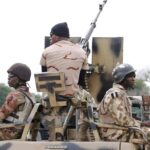


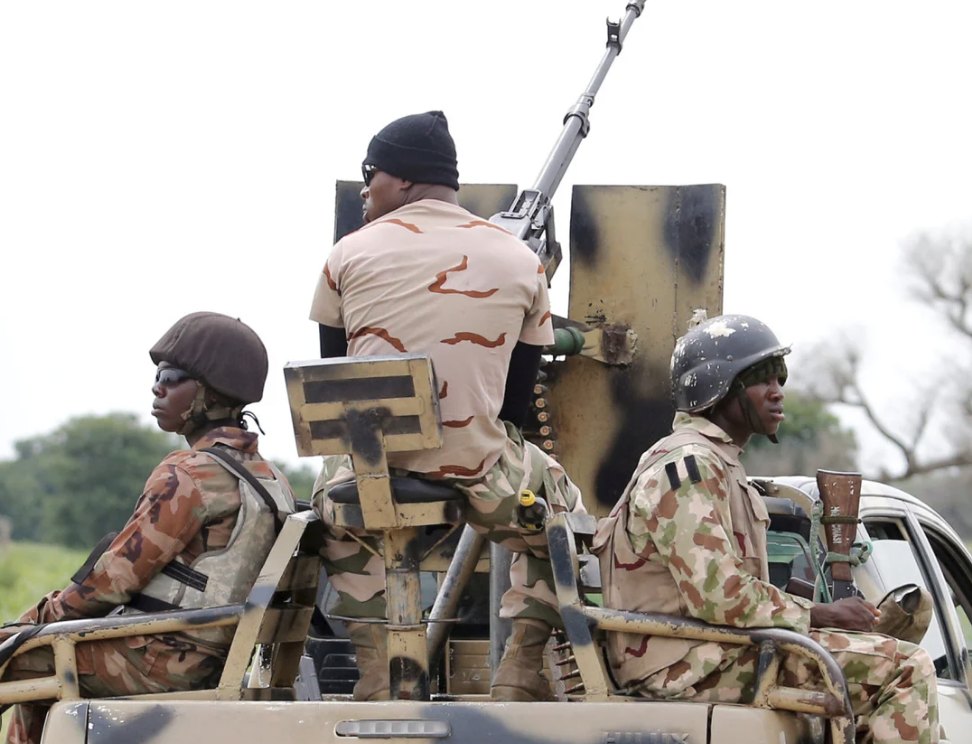
Nigerian troops say they have killed a member of the Islamic State West Africa Province (ISWAP) leadership council and a senior commander after fighting off an attack on their base in Kukawa Local Government Area of Borno State.
The military described the clash, which took place on Saturday, October 31, 2026, as a major blow to the group’s command structure. The claim has not been independently verified, and ISWAP has not commented.
What the military said
The announcement came in a statement on Sunday from Captain Mohammed Goni, the acting media information officer of Operation Hadin Kai, the joint military task force fighting insurgents in the North-East.
According to the statement, reported by Channels Television, P.M. News and Leadership, troops of the Joint Task Force stationed in Kukawa came under a large-scale ISWAP assault. The soldiers fought back with ground forces supported by air assets and pushed the attackers back.
The military said several fighters were killed in the exchange. It named two of them:
- Abu Hajara, described as a high-profile member of ISWAP’s Shura Council, the group’s top decision-making body.
- Abul Walid, described as a prominent commander and a close associate of Ba Shuwa, whom the military identifies as ISWAP’s overall leader, or Wali.
Goni’s statement also said two high-ranking Arab fighters were among the dead, though they were not named. Troops reportedly recovered a large number of weapons, ammunition and communication devices from the battlefield. The statement did not mention any casualties among the soldiers.
A second blow in one week
The Kukawa clash came about three days after another engagement in Buni Yadi, Yobe State, where the military said 55 insurgents were killed. Commanders it named from that operation include Ali Mandara Abba Gajiri, also known as Munzir, Habu Ikkima Nakif Yana Faruk and a fighter called Commander Gogore.
It also follows a separate announcement last week that Navy and Army troops killed 34 suspected insurgents in the Lake Chad area between October 28 and 30, which Flashinfong reported on Monday.
The Theatre Command said it remained committed to protecting law-abiding residents and to dismantling insurgent camps across the North-East. It credited the result to the troops’ combat readiness and “superior firepower”.
Why Kukawa matters
Kukawa, a historic town on the western edge of Lake Chad, was once the capital of the old Kanem-Bornu empire. In recent years it has become one of the hardest-hit areas in the insurgency because of its closeness to the lake’s islands and marshes, which ISWAP uses as hideouts.
ISWAP broke away from Boko Haram in 2016 and has since become the stronger of the two groups around Lake Chad. It has repeatedly attacked military bases in northern Borno, often at night and in large numbers, sometimes using drones and suicide car bombs. Security analysts have also raised concern about foreign fighters joining the group, which makes the military’s claim about Arab fighters notable.
The Nigerian military regularly announces the deaths of senior insurgent figures. Such claims are hard to confirm independently because of limited access to the conflict zone, and some commanders previously reported dead have later resurfaced.
What happens next
The military is expected to keep up air and ground operations around Kukawa, Monguno and the Lake Chad islands in the coming weeks. If the deaths are confirmed, the loss of a Shura Council member could disrupt ISWAP’s planning in the area, though the group has in the past replaced killed leaders quickly.
Residents of northern Borno, many of whom live in camps for displaced people, will be watching to see whether the recent operations bring lasting calm or are followed, as has often happened, by revenge attacks on soft targets.
The latest claims also come at a sensitive time politically, with insecurity set to be a central issue in campaigns for the 2027 general election.
Sources: Channels Television, P.M. News, Leadership, The Nation (via Legit.ng), Gazette Nigeria.