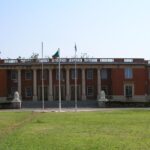


Zambia’s main opposition leader, Brian Mundubile, has been formally charged with treason alongside his running mate and 12 other people over an alleged plot to overthrow President Hakainde Hichilema’s government. A charge sheet read at a court in Lusaka on Monday, 23 November 2026, committed all 14 accused to the High Court for trial, according to Reuters and AFP.
Mundubile, who finished second to Hichilema in the 13 August presidential election and claimed the vote was rigged, has denied wrongdoing and says the case against him is politically motivated.
What the charge sheet says
Prosecutors allege that Mundubile, his running mate Makebi Zulu and 12 others plotted to overthrow the government by unlawful means between April and August 2026, Reuters reported. The charge sheet claims that Mundubile and a businessman provided money for five people to receive military training in Russia as part of the alleged plan.
According to AFP, Magistrate Nthandose Chabala referred the case to the High Court, where treason trials are heard. Under Zambia’s Penal Code, attempting to overthrow the government by unlawful means is treason. Since Zambia abolished the death penalty in 2022, the offence carries a maximum sentence of life imprisonment.
Defence lawyer Sakwiba Sikota dismissed the prosecution’s case, telling Reuters the charges did not make sense and describing it as a fishing expedition. He said the trial is expected to begin early next year.
From election challenger to detainee
Mundubile, 55, is a lawyer and accountant who represented Mporokoso in Zambia’s National Assembly from 2016 and served as Leader of the Opposition between 2021 and 2023. After a split in the former ruling Patriotic Front, he emerged as the presidential candidate of an opposition alliance and ran on the ticket of the National Reconciliation Party for Unity and Prosperity (NRPUP), with Zulu as his running mate.
Hichilema was declared the winner of the August election and has rejected allegations of fraud. A day after the vote, Mundubile and several associates were arrested in Lusaka on suspicion of plotting an insurrection, the BBC reported at the time. He has said he was himself the target of an assassination attempt. AFP reports that Mundubile and Zulu have now been in police custody for nearly three months.
Monday’s hearing was not the first time treason was raised. At the end of August, Mundubile’s lawyer, Milner Katolo, told the BBC that his client had been charged with treason. What is new is the formal committal: the case has now moved out of the magistrate’s court and into the High Court, with the prosecution’s allegations set out in detail for the first time, including the claim that five people were sent for military training abroad.
Concerns over Zambia’s democratic record
The case is being closely watched because of wider questions about the health of Zambia’s democracy. Reuters noted that analysts and observers said the August election was marred by serious irregularities, damaging the reputation of a country long seen as one of southern Africa’s more stable democracies.
Rights groups have accused the authorities of political repression since the vote, AFP reported. In September, the government cancelled the passports of six critics while they were abroad, a move opponents described as a further sign of a shrinking space for dissent. The government has denied accusations that it restricts dissent.
Hichilema, a businessman who won power in 2021 after years in opposition, had himself been charged with treason in 2017 under the government of the late President Edgar Lungu, a case that was later dropped.
What happens next
The 14 accused will now wait for the High Court to set a trial date, which the defence expects early in 2027. Their lawyers are likely to challenge the evidence, including the claims about military training in Russia, while opposition supporters continue to press for the release of the detained leaders. The outcome will be seen as a key test of judicial independence in the copper-producing country.
Sources: Reuters, AFP (via Courthouse News), BBC, Africa Briefing.