


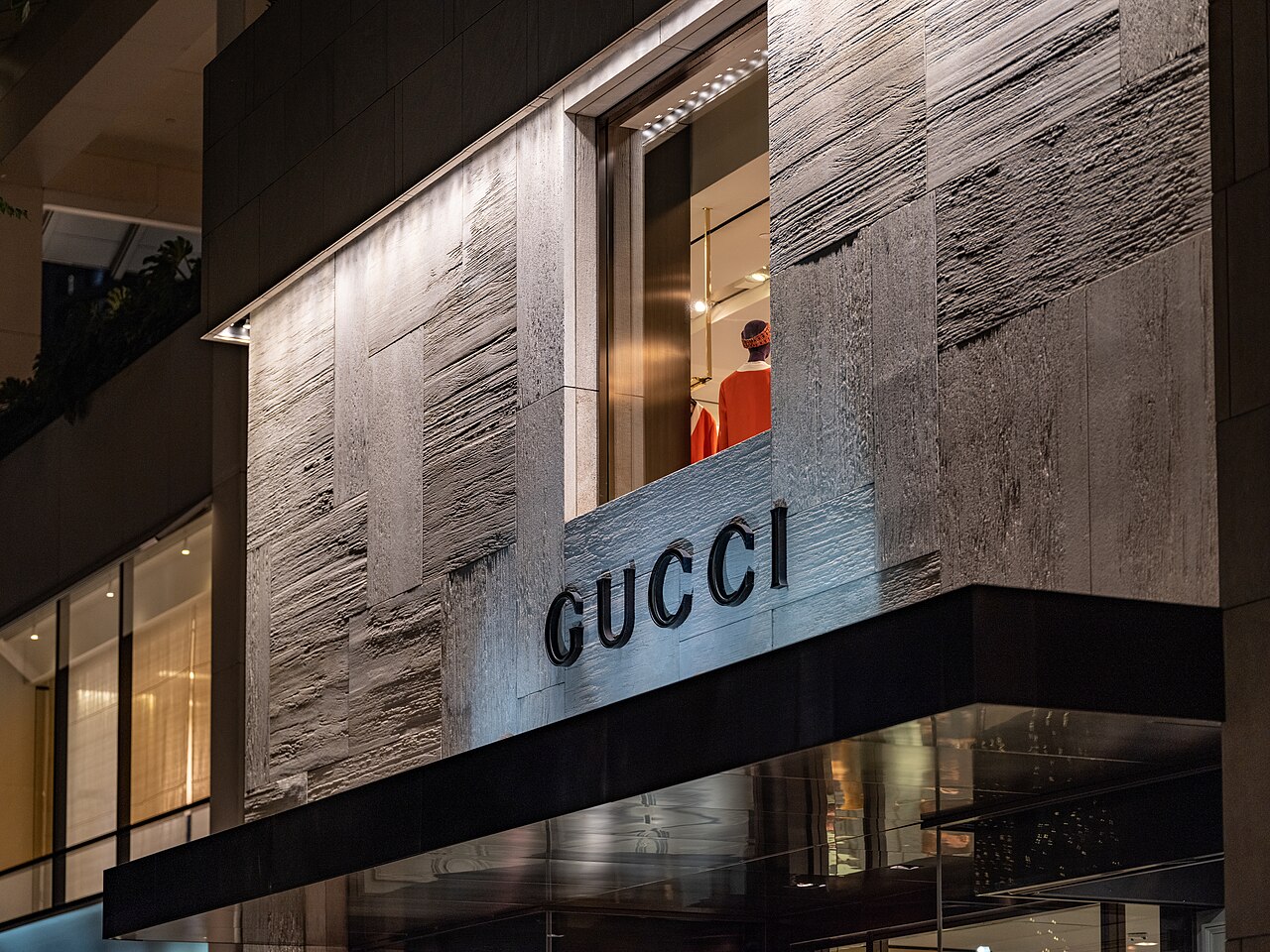
Gucci has quietly lowered prices on a wide range of its handbags, shoes and clothing, in some cases by as much as 30%, in a rare move for a top luxury house as it struggles to win back shoppers after years of falling sales.
The cuts, first spotted by shoppers and price-tracking tools over the summer, were reported this week by The Wall Street Journal and picked up by Forbes, Luxus Plus and South Korea’s Financial News. Reuters had earlier reported, citing two sources at Gucci’s parent company Kering, that the Italian brand was trimming prices on a select number of products to regain market share.
How Much Prices Have Fallen
The most widely cited example is Gucci’s small crystal Padlock top-handle bag. In France it cost €3,500 in July but now sells for €2,450, a cut of 30%, according to the Wall Street Journal and analysts at Bernstein.
Several Gucci sneakers have dropped from about €800 to between €560 and €595, Forbes reported, citing NSS Magazine. Luxus Plus said some dresses and jackets are now nearly €900 cheaper, and that the Mercato tote launched in the spring is 20% to 25% cheaper than its original price.
In China, the small Mercato bag fell from 25,500 yuan to 20,000 yuan, while the Ophidia mini bucket bag lost more than 40% of its price, according to Luxus Plus. Gucci has also added 16 handbag styles priced at $2,000 or less on its US website.
Why Gucci Is Cutting Prices
Gucci, once Kering’s biggest money-maker, has seen its sales decline for 13 consecutive quarters, according to the Wall Street Journal. Its third-quarter revenue was €1.29 billion, down 6% on a comparable basis, with retail sales down 9% as fewer people visited its stores in mainland China and Japan, Forbes reported.
Kering’s chief executive, Luca de Meo, who joined the group from carmaker Renault last year, has admitted that luxury brands pushed prices too far. On the July earnings call he said the group had tested how much customers would tolerate and that the impact on sales volumes had been severe. He has since said that price rises that were once possible are no longer feasible.
Kering does not describe the changes as a discount strategy. According to Luxus Plus, the group calls them a “targeted adjustment” on items whose prices had become too high, and says new collections are being launched at more competitive prices.
Louis Vuitton Under Pressure Too
Gucci is the only major luxury house so far to cut list prices on its best-known existing products, Forbes noted. But the pressure is spreading. Goldman Sachs estimates that Louis Vuitton’s third-quarter sales fell about 8%. The brand accounts for more than half of the operating profit of its parent, LVMH.
In 2025, LVMH’s finance chief Cécile Cabanis firmly ruled out price cuts, saying “We’re not Coca-Cola.” This autumn, however, she told investors that management had discussed drastic measures such as price cuts, according to Forbes and Financial News. LVMH has not announced any reductions.
Other brands are taking different routes. Chanel and Dior have added cheaper entry-level items, while Hermès has continued to raise prices and is still growing strongly, Forbes reported.
What It Means for Shoppers
Analysts say the luxury industry relies heavily on middle-income “aspirational” buyers, who make up more than half of sales at both Gucci and Louis Vuitton, according to Bernstein. These shoppers have been squeezed by inflation, and many have stopped buying. Bain and Altagamma estimate the number of luxury customers worldwide fell from about 400 million in 2022 to around 340 million in 2025.
For Nigerian buyers who shop for luxury goods in Europe, Dubai or online, the cuts could mean noticeably lower prices on some Gucci items. However, the weak naira and import costs mean the savings may be smaller for those buying at home.
What Happens Next
Investors will be watching Kering’s next results to see whether lower prices bring shoppers back. Some analysts warn that cutting prices risks damaging a brand’s exclusive image. Others argue that Gucci had little choice after years of steep increases. The decision at LVMH on whether to follow Gucci’s lead could shape pricing across the luxury industry in 2027.
Sources: The Wall Street Journal, Forbes, Reuters, Luxus Plus, Financial News (Korea), NSS Magazine.