


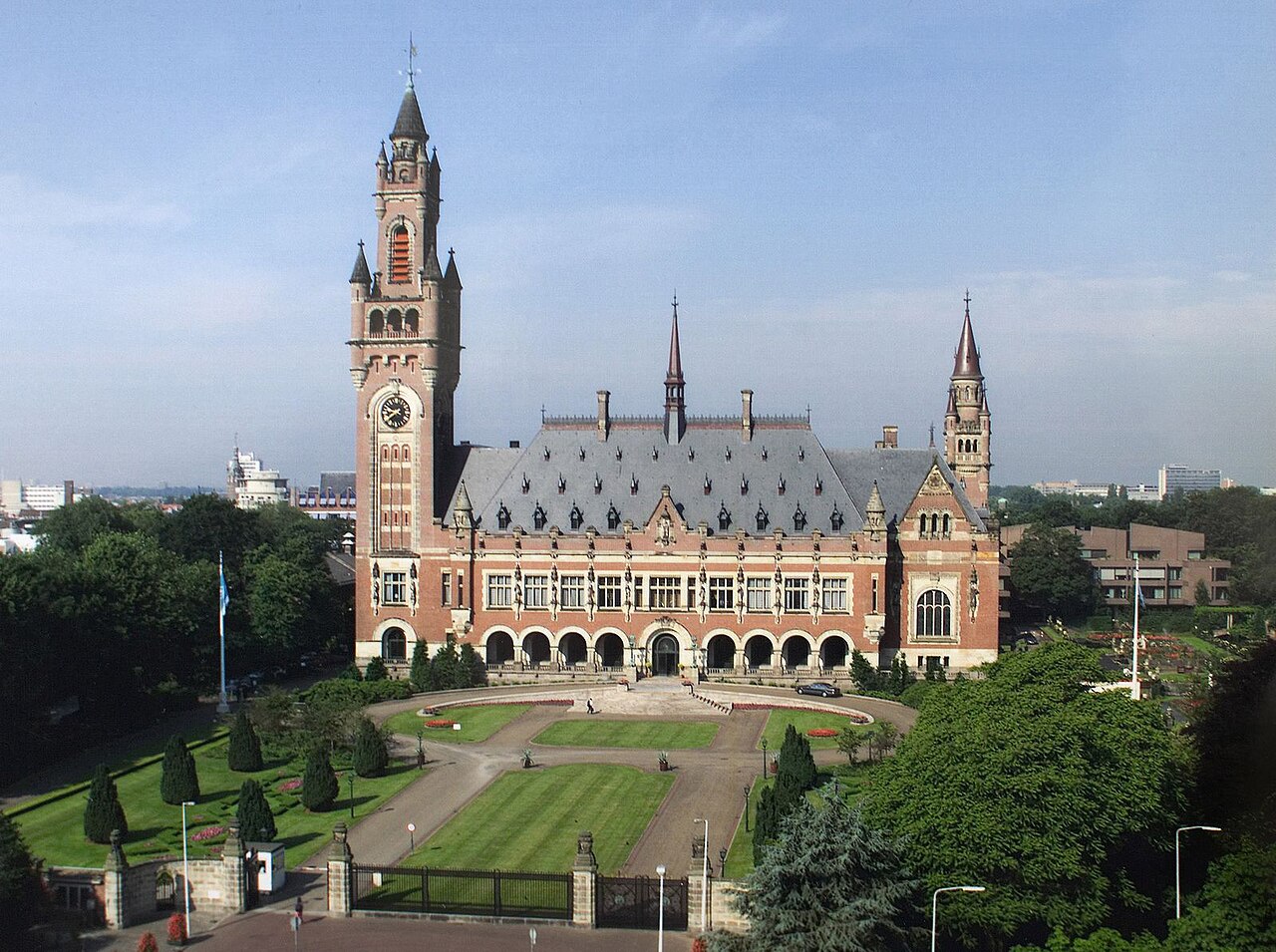
Professor Dapo Akande, a Nigerian-born scholar of international law, has been elected a judge of the International Court of Justice (ICJ), the United Nations’ highest court. Akande, who stood as the United Kingdom’s candidate, was one of five jurists chosen on Tuesday in concurrent votes by the UN General Assembly and the Security Council in New York.
His election adds a prominent Nigerian name to the 15-member bench in The Hague and is being celebrated in both London and Abuja as a landmark moment for Nigerians in the diaspora.
Five judges elected after several rounds
According to Al Jazeera and China’s Xinhua news agency, the five judges elected were Akande (United Kingdom), François Alabrune (France), Mahmoud Daifallah Hmoud (Jordan), Rena Lee (Singapore) and Phoebe Okowa (Kenya). Hmoud and Okowa were already serving on the court, filling vacancies left mid-term, and were re-elected for full terms.
To win, a candidate needs an absolute majority in both the General Assembly and the Security Council, with the two bodies voting separately by secret ballot. Xinhua reported that three rounds of voting were needed before a conclusive result was reached.
Al Jazeera reported that the two chambers quickly agreed on four candidates but split over the fifth seat. The Security Council favoured Ecuador’s Marcelo Vázquez-Bermúdez, while the General Assembly backed Kenya’s Okowa. The deadlock ended when Vázquez-Bermúdez withdrew and Okowa secured majorities in both bodies. That means two of the five newly elected judges have roots in Africa.
According to Nigerian reports, Akande secured 11 of the 15 Security Council votes, above the eight required, in the first round. The new judges will begin nine-year terms on February 6, 2027.
From Ife to Oxford
Akande studied law at the then University of Ife, now Obafemi Awolowo University, graduating in 1992. He was called to the Nigerian Bar in 1993 and went on to earn a master’s degree at the London School of Economics.
He taught at several British universities, including Durham, Nottingham and Cambridge, before joining the University of Oxford in 2004. He is now Chichele Professor of Public International Law at Oxford, a Fellow of All Souls College and co-director of the Oxford Institute for Ethics, Law and Armed Conflict. He also practises from Essex Court Chambers in London.
Since 2023 he has been a member of the UN International Law Commission, the body that helps develop and codify international law. His election to that body in 2021 was notable because he was nominated by the UK, Japan, Kenya, Slovenia and Nigeria, drawing backing across several UN regional groups.
Reactions in London and Abuja
The UK government announced in 2024 that it would nominate Akande for the ICJ. During a General Assembly debate on October 29, UK Justice Secretary Alex Norris said he “would make a formidable contribution” to the court’s work, according to Nigerian media reports. The UK Foreign Office later welcomed his election.
Nigeria’s Permanent Representative to the UN, Ambassador Jimoh Ibrahim, congratulated President Bola Tinubu on the outcome and said it reinforced Nigeria’s influence in international law, Nigerian outlets reported.
Under the court’s rules, ICJ judges sit as independent jurists. They do not represent the governments that nominate them or the countries they come from.
A court with a record caseload
The new judges will join a court that is busier than ever. ICJ President Yuji Iwasawa told the General Assembly last week that 24 contentious cases are pending, covering disputes over territory, human rights and the interpretation of treaties, Al Jazeera reported.
Among the high-profile matters before the court is South Africa’s genocide case against Israel over the war in Gaza. The court is also due to deliver its judgment on November 19 in The Gambia’s case accusing Myanmar of genocide against the Rohingya.
What happens next
Akande and the other judges-elect will be sworn in when their terms start in February 2027. Until then the current bench continues to sit. For many Nigerians at home and abroad, his rise from a law student in Ile-Ife to the world’s top court is another example of diaspora professionals reaching the top of global institutions.
Sources: Al Jazeera, Xinhua, Political Economist, Wikipedia, UK Government (GOV.UK).