


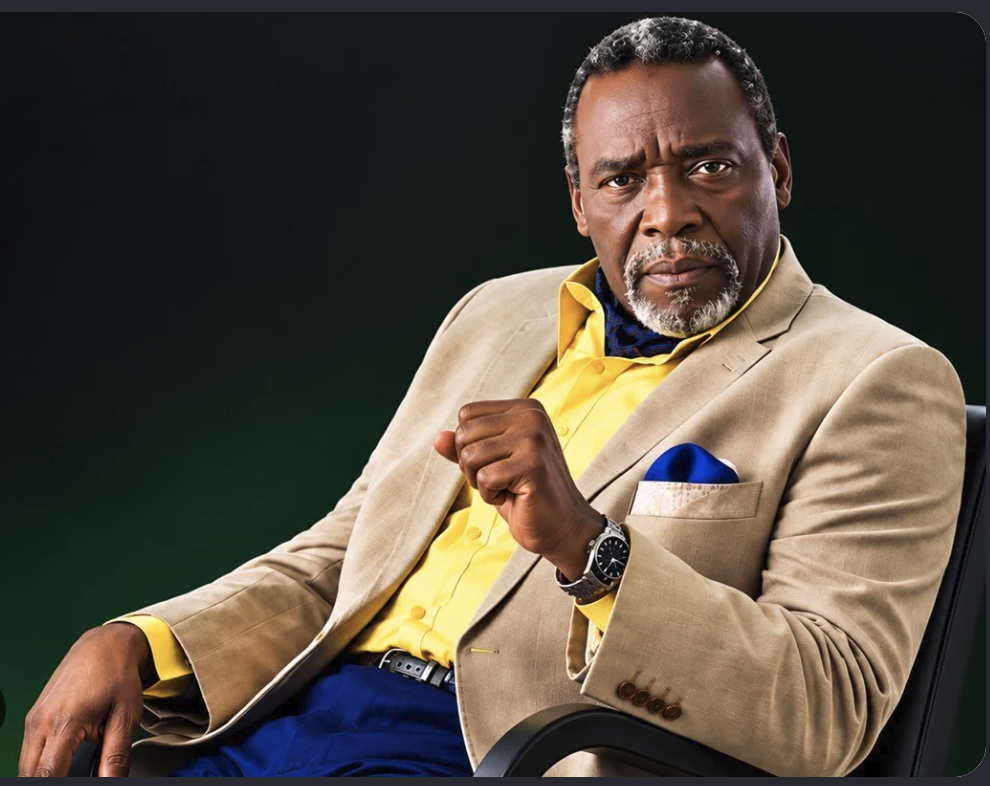
Olu Jacobs: The Untold Story of Nollywood’s Greatest Father Figure – A Legacy Beyond the Camera
Nigeria lost one of its greatest sons on Tuesday, September 16, 2026. Oludotun Baiyewu Jacobs – known to the world simply as Olu Jacobs – died at the age of 84, leaving behind a legacy that stretches far beyond the hundreds of films and television productions that made him a household name across Africa and the diaspora.
Every Nigerian news outlet is writing about Olu Jacobs this week. But most will tell you the same story – the awards, the films, the career highlights. FlashInfoNG wants to tell you the story most others will not tell. The story of a young man from Kano who dared to dream in a time when dreaming was dangerous. The story of a husband who stood quietly by his wife’s side as she announced to the world that he was ill. The story of a father figure who shaped an entire industry not just through his performances but through who he was.
Olu Jacobs was born on July 11, 1942, in Kano – then part of British colonial Nigeria. His full name, Oludotun Baiyewu Jacobs, reflected a Yoruba heritage that would always remain close to his heart even as his career took him thousands of miles from home. What most people do not know is that Olu Jacobs trained at the Royal Academy of Dramatic Art in London – the same institution that has produced some of the greatest actors in British and world theatre including Anthony Hopkins, Peter O’Toole, and Kenneth Branagh. RADA does not accept students on the basis of who they know. It accepts them on the basis of raw talent. That Olu Jacobs, a young Nigerian man in 1960s London, earned his place there speaks to a level of ability that went far beyond what Nigerian screens would eventually contain.
Before Nollywood existed, before he became the commanding patriarch of Nigeria’s film industry, Olu Jacobs spent years working in British television and theatre. He appeared in The Goodies – one of Britain’s most popular comedy programmes. He had roles in The Professionals, a gritty British crime drama enormously popular across the UK. He featured in The Tomorrow People, Till Death Us Do Part, Barlow at Large, Angels, and The Third Eye. These were not small appearances. These were recurring roles in mainstream British television at a time when Black African actors had almost no representation on British screens at all. Olu Jacobs broke through not by being exceptional for an African actor — but by being exceptional, full stop.
He also appeared in international films, working across different genres and building a craft that was forged in some of the most demanding theatrical and television environments in the world. By the time he returned to Nigeria, he was not an aspiring actor looking for his first break. He was a fully formed, internationally experienced professional who brought a completely different standard to whatever production he joined.
When Olu Jacobs returned to Nigeria and began working in the country’s emerging film industry, he brought something that money cannot buy and training alone cannot fully teach – presence. Directors who worked with him speak consistently about the same experience: when Olu Jacobs walked onto a set, the energy changed. Junior actors sat straighter. Crew members worked harder. The standard of everyone around him lifted simply because he was there. He is described alongside Pete Edochie as one of the godfathers of Nollywood – the actors whose generation built the foundation on which today’s billion-dollar industry stands. But while much is written about his films and his awards, less is written about his role as a mentor and example. Olu Jacobs showed a generation of Nigerian actors what professionalism looked like. He showed them that it was possible to be Nigerian, to be African, to be deeply rooted in your culture – and to be world class.
He appeared in over 200 productions across his career. He won the Africa Movie Academy Award for Best Actor in a Leading Role and received lifetime achievement honours from multiple institutions. In 2011, the Nigerian government recognised his contributions with the national honour of Member of the Order of the Federal Republic.
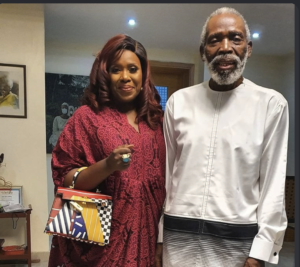
In 1989, Olu Jacobs married Joke Silva – herself one of Nigeria’s finest and most accomplished actresses. Their marriage became one of the most admired relationships in Nigerian public life. In an entertainment industry where marriages are fragile and public relationships often performative, Olu and Joke represented something genuine and enduring. Joke Silva’s announcement in 2021 that her husband had been diagnosed with Lewy body dementia – a progressive neurodegenerative disease – moved Nigeria deeply. She did not have to make that announcement. She could have simply said he was unwell and left it at that. Instead she chose to name the illness, to educate the public about a condition that most Nigerians had never heard of, and to do so with the same grace and dignity that had defined her own career.
Lewy body dementia is a cruel disease. It affects cognition, movement, and behaviour. It is progressive and currently has no cure. For the final years of his life, one of the most commanding presences in Nigerian entertainment needed constant care. That Joke Silva provided that care – quietly, without complaint, while continuing to work and contribute to her own industry – is a testament to the depth of their partnership.
Something that deserves to be said clearly: Olu Jacobs was killed multiple times by social media before his actual death. False reports of his death circulated in 2021, 2022, and again in June 2024 – on each occasion causing distress to his family and requiring his son Olusoji Jacobs to publicly state that his father was still alive. The family handled each of these incidents with extraordinary dignity. They did not lash out. They did not engage in prolonged public disputes with the bloggers and social media accounts spreading the false information. They simply corrected the record and asked for privacy. That patience and grace under difficult circumstances speaks to the values that defined the Jacobs household. When the real announcement came on September 16, 2026, it came in the same understated way – a family statement, a request for privacy, and a simple acknowledgment that a life well lived had come to its conclusion.
Atiku Abubakar, Nigeria’s former vice president, captured the depth of the loss when he wrote that Nigeria had lost not just a great actor but an institution, a cultural icon, and one of the finest ambassadors of the country’s creative spirit. President Bola Tinubu said Olu Jacobs played a big role in building Nigeria’s cultural identity. The Association of Movie Producers described his passing as a monumental loss to Nollywood and African cinema. Tributes poured in from across the Nigerian creative community and from the diaspora – from Nigerians in the United States, the United Kingdom, Canada, and across Africa who had grown up watching him, been moved by him, and measured their own definition of greatness partly against his example.
Olu Jacobs was 84 years old. He was born in colonial Nigeria, trained in London, worked in British television, returned home, and spent the rest of his life building something that will outlast every individual who was part of it. He leaves behind his wife Joke Silva, his son Olusoji, and a generation of Nigerian actors who are better at their craft because he existed. The Lion of Lufodo is gone. But what he built will stand for as long as Nigeria makes films. And Nigeria will make films forever.
FlashInfoNG extends deepest condolences to the family of Olu Jacobs, to Joke Silva, and to the entire Nollywood community. Rest in perfect peace, sir. Oludotun Baiyewu Jacobs – July 11, 1942, Sep. 16, 2026.