

South Africa’s African National Congress (ANC) is heading for its worst ever result in local government elections, with partial results from Wednesday’s vote showing the party that has ruled the country since 1994 on around 32% nationally, while the Democratic Alliance (DA) leads in most of the country’s big cities.
With well over half of the votes counted by late Thursday, data from the Electoral Commission of South Africa (IEC) showed the ANC on roughly 32%, the DA second on about 25%, and former president Jacob Zuma’s uMkhonto weSizwe (MK) party third on around 8.5%, Al Jazeera reported. The figures are provisional and could still shift, with official results expected on Sunday, November 8.
A Historic Low for the ANC
If the trend holds, the ANC’s share will be far below the roughly 45.6% it won in the 2021 municipal elections, which was itself its weakest local result at the time. According to BusinessTech, the early results have closely tracked projections by the Council for Scientific and Industrial Research (CSIR), which forecast the ANC at about 31.7% and the DA at about 25.8% nationally.
The Economic Freedom Fighters (EFF) also appear to be losing ground, with partial counts putting the party at around 6%, compared with just over 10% in 2021. ActionSA, led by former Johannesburg mayor Herman Mashaba, has gained, polling around 4 to 5% nationally and performing strongly in Gauteng.
Turnout appears to have risen. Al Jazeera, citing the electoral commission, said about 15.9 million of the 29.2 million registered voters cast ballots, an estimated turnout of around 54.5%, up from 46% in 2021.
DA Ahead in Six Metros, MK Leads Durban
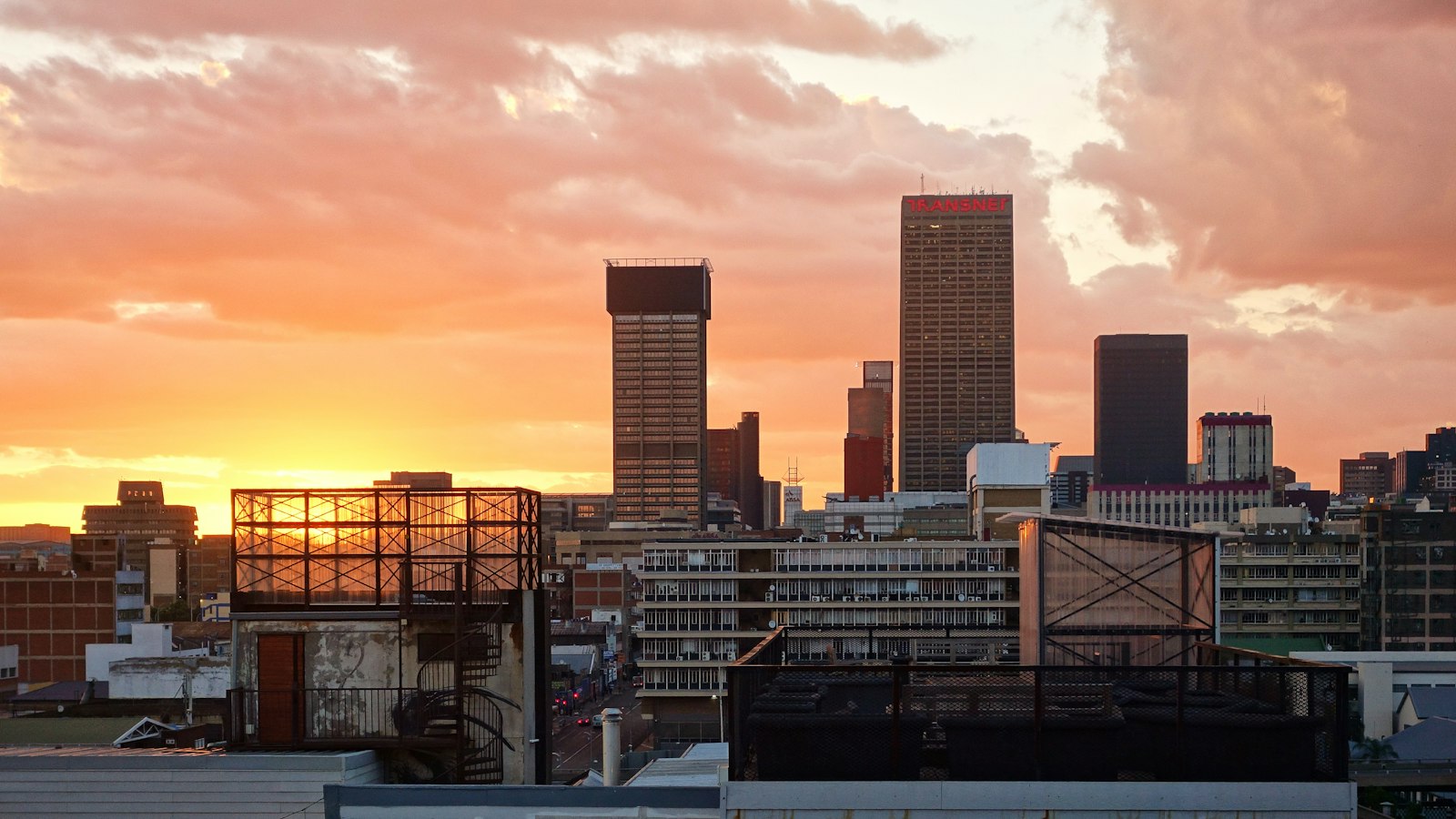
The contest in South Africa’s eight metropolitan municipalities is being watched most closely. An analysis of proportional representation ballots by Sunday World found the DA leading in six of them: Johannesburg, Tshwane (Pretoria), Ekurhuleni, Cape Town, Nelson Mandela Bay and Mangaung.
In Johannesburg, the country’s economic hub, the DA, whose mayoral candidate is former party leader Helen Zille, was on roughly 40% of PR votes, with the ANC and ActionSA each on around 17%, according to Sunday World and the provisional figures reported by Inside Metros. In Tshwane, the DA was ahead of ActionSA, with the ANC in third place. In Cape Town, the DA’s stronghold, the party was above 60%.
In eThekwini (Durban), MK was leading with around 44% of PR votes, well ahead of the DA and the ANC, while the ANC led in Buffalo City in the Eastern Cape. Several of these counts were still incomplete when the figures were published, and the ruling party’s position could improve in some areas as more results come in.
Coalition Talks Ahead
Even where the DA is ahead, outright majorities are far from assured outside Cape Town. Al Jazeera noted that the results could trigger another round of complex coalition negotiations in several cities. Johannesburg, Tshwane and Ekurhuleni have all been run by unstable coalitions since 2016, with frequent changes of mayor that residents blame for collapsing services, water outages and broken infrastructure.
DA leader Geordin Hill-Lewis, who is also mayor of Cape Town, was already claiming victory, according to Al Jazeera. Since 2024, the DA and the ANC have governed together nationally in a Government of National Unity (GNU) after the ANC lost its parliamentary majority, and President Cyril Ramaphosa said this week that the GNU would continue.
Why It Matters for Africa
South Africa is the continent’s most industrialised economy and a key trading partner for Nigeria and the rest of the continent. The decline of the ANC, the liberation movement once led by Nelson Mandela, is being closely watched across Africa, where several long-ruling parties face growing frustration over unemployment, corruption and poor public services. The vote also comes as South Africa deals with tense relations with Washington, including its planned removal from the AGOA trade deal from January 2027.
What Happens Next
The IEC is expected to announce official results on Sunday, November 8, after which seats will be allocated in the country’s 257 municipal councils. Parties will then have to negotiate coalitions in councils where no one has a majority, with the battle for control of Johannesburg, Tshwane, Ekurhuleni and Durban likely to dominate South African politics in the coming weeks.
Sources: Al Jazeera, BusinessTech, Sunday World, Inside Metros, Electoral Commission of South Africa (provisional results).