

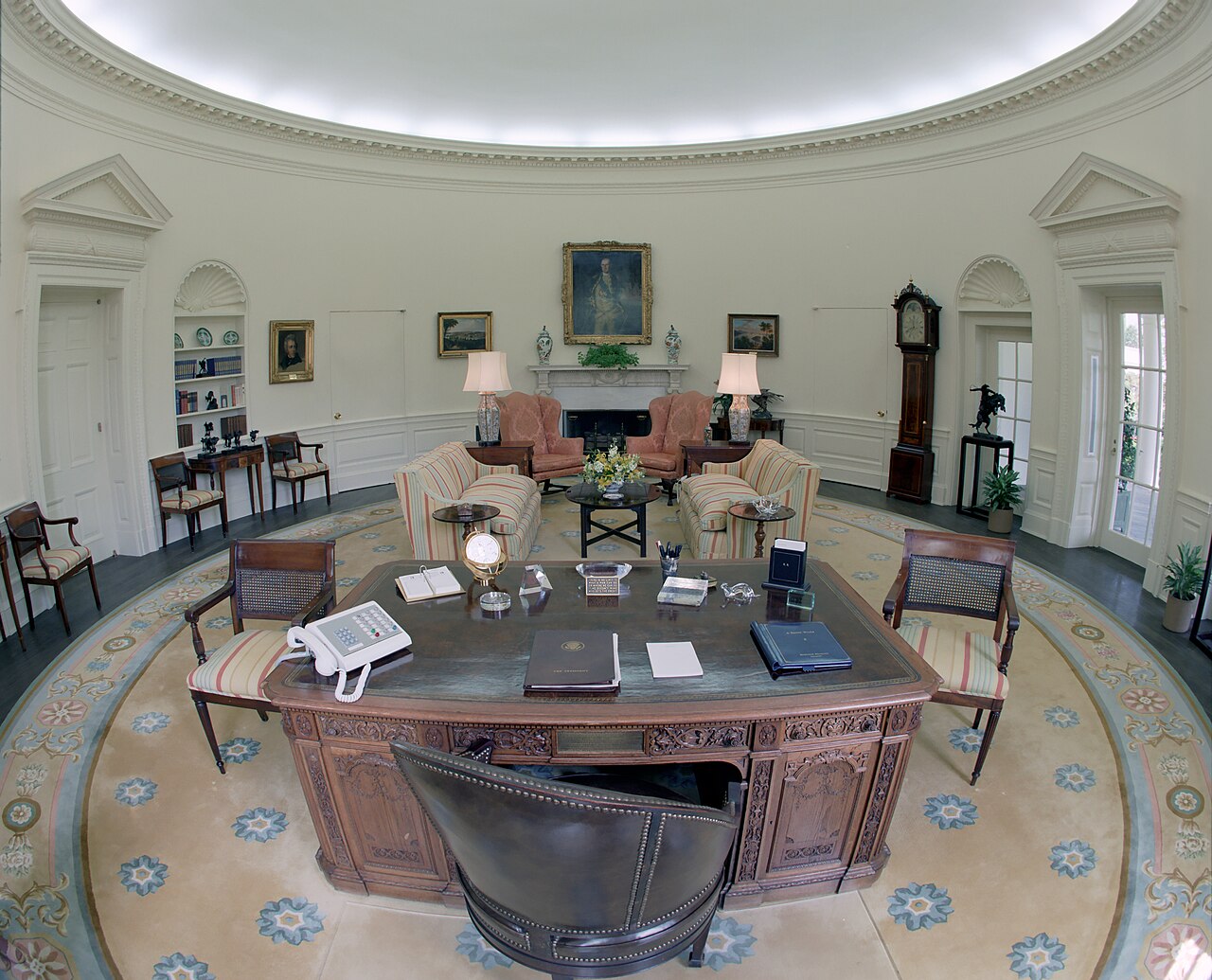
US President Donald Trump has signed a proclamation turning the Oval Office and nearby rooms of the White House into a national monument, a move he says will protect the spaces from future changes. The proclamation, signed on Thursday, November 5, creates the “Oval Office National Monument”, covering the Oval Office, the Outer Oval Office and the Cabinet Room.
Speaking to reporters in the Oval Office, Trump said the room “will not be allowed to be touched by anybody,” according to the Associated Press. The signing came two days after voters handed control of both chambers of Congress to the Democrats in the midterm elections.
What the Proclamation Says
The White House said Trump acted under the Antiquities Act, a 1906 law that allows presidents to protect landmarks and sites of historic or scientific interest. The law is usually used to protect large areas of public land, such as national parks and wilderness.
Under the proclamation, the Secretary of the Interior, working through the National Park Service, will manage the monument in a way that protects its “historic character” and “architectural integrity”. The Interior Department must draw up a management plan with the White House Office of Administration. Any plan that would substantially alter or demolish key architectural features must be documented and reviewed, and alternatives considered, before it goes ahead.
The White House fact sheet said the Oval Office already has National Historic Landmark status but deserves greater recognition as the working heart of the presidency.
The rooms covered are among the best known in American politics. The Oval Office is where presidents meet world leaders, sign laws and address the nation, while the Outer Oval Office houses the president’s closest aides. The Cabinet Room, next door, is where the president holds meetings with Cabinet secretaries. All three sit in the West Wing of the White House.
Future Presidents Can Still Redecorate
Despite Trump’s comments, the proclamation itself does not freeze the rooms as they are. The text states that nothing in it restricts a president’s power to redecorate, choose furniture, or make ordinary operational and security changes, as long as they do not substantially damage the building’s historic structure.
The proclamation also says it does not change existing exemptions for the White House under federal historic preservation law, or reduce Congress’s authority over federal property. It does not say whether a future president could change or cancel the designation.
Trump’s White House Makeover
Trump has made the White House a personal project during his second term. The AP notes he has filled the Oval Office walls with portraits and a copy of the Declaration of Independence, and added many golden accents. He has also championed a new White House ballroom, which the White House says expands the East Wing at no cost to taxpayers, and the restoration of the Lincoln Memorial Reflecting Pool.
According to the AP, Thursday was the third day that week on which Trump spoke publicly about his building projects in Washington. The White House presents the projects as part of a wider push to restore the grandeur of the capital, including a 2025 order favouring classical architecture for new federal buildings.
What Happens Next
The National Park Service will now have to work out how to manage rooms that remain in daily use by the president and staff. Legal experts may also debate whether the Antiquities Act, written mainly for land and historic sites, is a suitable tool for protecting rooms inside a working government building. Any challenge, or a future president’s decision to change the designation, would test how lasting Trump’s move really is.
Sources: The White House, Associated Press (via PBS NewsHour), ABC News.