


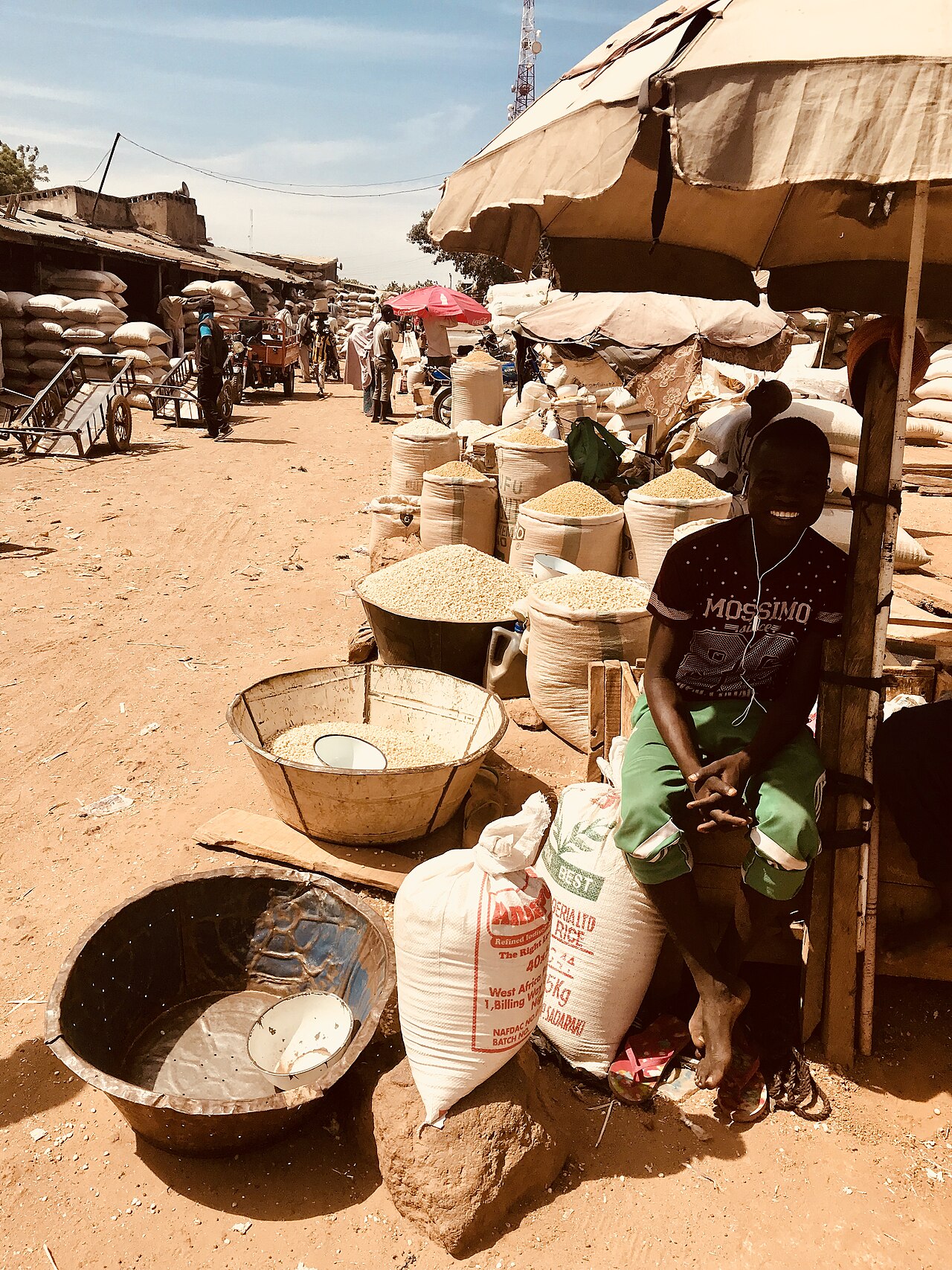
The Federal Government has announced a fresh set of measures aimed at bringing down food prices, including the release of grains held in government storage and the distribution of three million bags of fertiliser to farmers within the next month.
The Minister of Agriculture and Food Security, Senator Abubakar Kyari, disclosed the plans on Wednesday, 18 November, in Abuja, according to a statement from the ministry published by the Federal Ministry of Information and National Orientation. The announcement was also reported by Punch, Vanguard, ThisDay and other outlets.
The minister did not say how much grain would be released or when, telling reporters that the government would announce the details and distribution guidelines later.
What the government is promising
Kyari said grains bought and stored under the Bank of Agriculture’s Guaranteed Minimum Price programme would be put back into the market “very soon” to stabilise prices. Under that programme, the government buys produce from farmers at an agreed floor price, which the ministry says gives farmers a guaranteed market and encourages them to keep planting.
On farm inputs, the minister said the Presidential Fertiliser Initiative was preparing to release three million bags of fertiliser within the next month to cut production costs. Punch and Vanguard reported that the fertiliser release follows an intervention announced by Vice-President Kashim Shettima. By comparison, ThisDay noted that the government distributed about 2.15 million bags during the 2024 wet season.
Kyari also said 2,000 tractors had already been deployed under the government’s mechanisation programme, with deliveries under a second phase expected to begin within two to three months. He cited a $33 million agreement with a Turkish company for greenhouse projects in the Special Agro-Industrial Processing Zones as a sign of investor interest in the sector.
The minister said the policies would be applied in a way that balances the interests of consumers, farmers and food processors, so that releasing stored grain does not undercut farmers’ incomes.
Survey says most major crops will record higher output
The announcement came at the presentation of the 2026 Wet Season Agricultural Performance Survey, conducted by the National Agricultural Extension and Research Liaison Services (NAERLS) at Ahmadu Bello University, Zaria.
Presenting the report, NAERLS Executive Director Prof. Yusuf Sani said 13 of the 17 major crops assessed are expected to record higher production in 2026. According to the ministry, 19 teams carried out field assessments across all 36 states and the Federal Capital Territory between 31 August and 6 September.
The survey named Niger State as the leading rice producer, Kano as the top sorghum producer and Yobe as the leading millet producer. Prof. Sani called for better storage, post-harvest handling and market access so that higher harvests translate into cheaper food.
Kyari said the survey only covered the wet season and that NAERLS had been directed to assess dry-season production separately to establish total output for the year. He credited expanded farmland partly to improved security, saying military operations had helped farmers return to areas they had abandoned.
Why food prices remain a concern
The measures come as food costs remain one of the biggest pressures on Nigerian households. The National Bureau of Statistics said last week that headline inflation eased to 14.06% in October, but food inflation remained close to 20%. Average food prices fell by about 0.75% month on month in October, according to the NBS figures cited by several outlets, showing that prices are easing but slowly.
The minister said comparisons between 2025 and 2026 showed price drops for some items, particularly dairy products and maize. Many families, however, continue to report high prices in markets for staples such as rice, beans and garri, and the cost of cooking gas has also been rising in several cities in recent weeks.
Releasing stored grain is a tool governments have used before to calm markets, typically ahead of the festive season when demand rises. Its impact usually depends on how much grain is released, where it goes and whether it reaches ordinary markets rather than being bought up by middlemen.
What happens next
The key detail still missing is the size and timing of the grain release. The ministry says guidelines on how the stored commodities will be distributed, and which markets will receive them, will be announced soon.
Farmers will also be watching to see whether the three million fertiliser bags arrive in time for dry-season planting and at what price. Kyari said another harvest expected within the next month should add to supply and help moderate prices further.
The next NBS inflation report, due in mid-December, will give the first indication of whether the latest interventions are having any effect on food costs before the Christmas and New Year period.
Sources: Federal Ministry of Information and National Orientation, Punch, Vanguard, ThisDay, Naija News, PM News.