


Ethiopia and Eritrea have moved large numbers of troops to their shared frontier, conflict monitors and sources linked to militias in northern Ethiopia say, following a week of reported artillery fire and clashes near Badme, the border town at the heart of the two countries’ devastating war a quarter of a century ago. Neither government has declared war, but the build-up has alarmed diplomats who fear the Horn of Africa could slide into a direct conflict between the two neighbours.
What the conflict monitors are reporting
According to Reuters, which first reported the troop build-up on Wednesday, the Armed Conflict Location and Event Data project (ACLED) said in an assessment on November 17 that shelling and armed clashes had taken place around Badme since the previous week.
ACLED said that on November 12, drones it believed were operated by Ethiopia’s military struck likely Eritrean positions around Badme, and that Eritrean forces then fired artillery towards Ethiopian positions. It also reported a direct clash between the two armies on the Ethiopian side of the border the following day, November 13.
Those accounts are disputed. A source connected to the pro-government Tigray Peace Force told Reuters that Ethiopian soldiers were chasing Tigrayan rebels towards the border and had not engaged Eritrean troops. Ethiopia has not commented on the drone strikes. Eritrea’s Information Minister, Yemane Gebremeskel, dismissed reports of a military build-up as Ethiopian “propaganda”, according to bne IntelliNews and Reuters.
Independent confirmation of fighting inside Eritrea has not been established, and access to the area for journalists is extremely limited.
Why Badme matters
Badme, a small town on a dusty plain, carries enormous symbolic weight. Ethiopia and Eritrea fought a border war over it and surrounding territory from 1998 to 2000, a conflict that killed tens of thousands of people. A boundary commission set up after the war later ruled that the town belonged to Eritrea, but Ethiopia kept control of it for years afterwards.
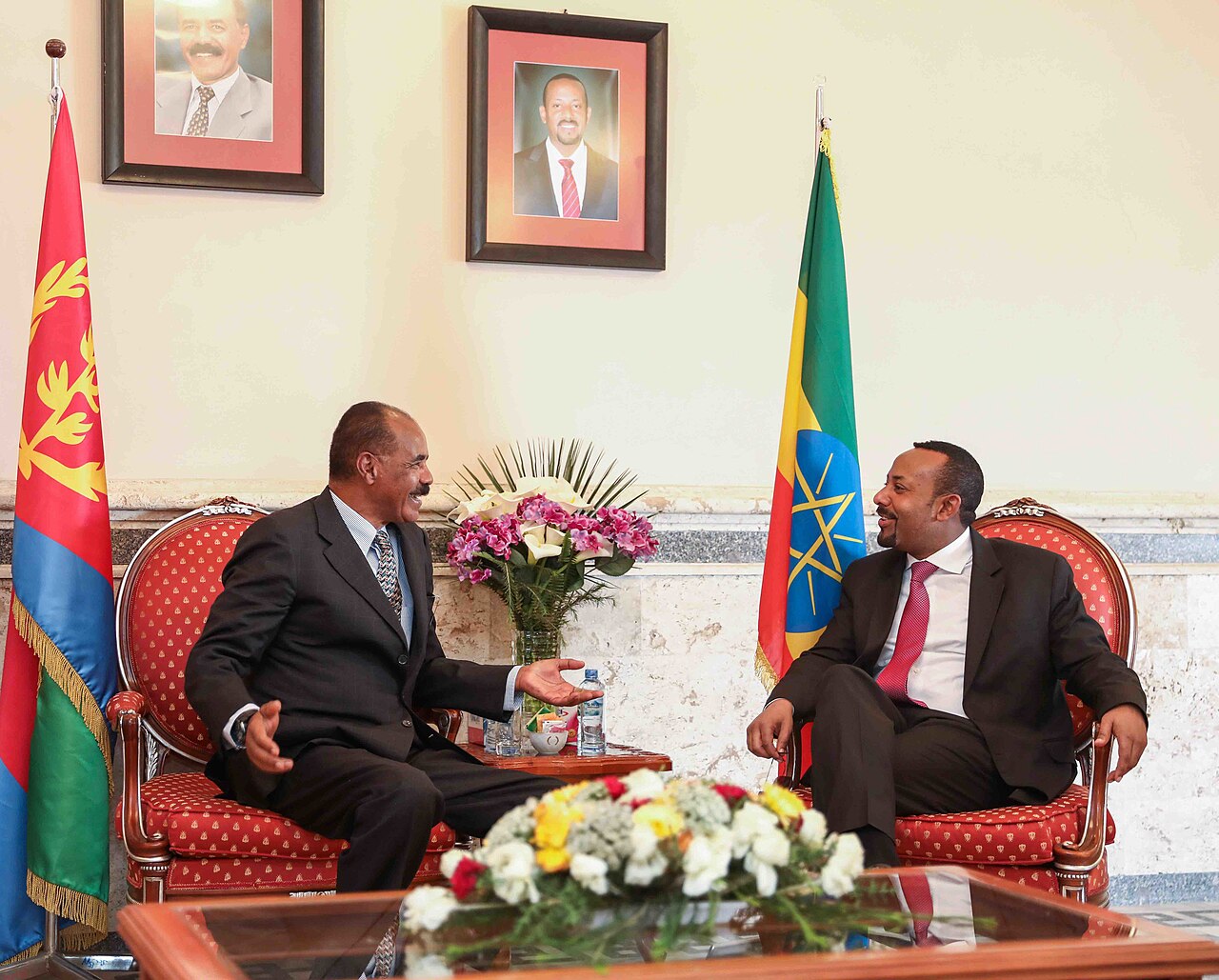
The stand-off ended in 2018, when newly installed Ethiopian Prime Minister Abiy Ahmed accepted the ruling, flew to the Eritrean capital Asmara and signed a peace declaration with President Isaias Afwerki. The rapprochement won Abiy the 2019 Nobel Peace Prize. The two governments then fought on the same side against Tigrayan forces during Ethiopia’s 2020–2022 civil war.
How the allies became rivals again
Relations have since collapsed. Eritrea was left out of the 2022 Pretoria agreement that ended the Tigray war, and Asmara has grown increasingly hostile to Abiy’s repeated statements that landlocked Ethiopia must secure access to the Red Sea. Eritrea sees those remarks, including references to its southern port of Assab, as a threat to its sovereignty. Abiy has said Ethiopia intends to gain sea access by peaceful means.
Fresh fighting erupted in northern Ethiopia in late September 2026, when federal forces moved against Tigrayan rebels. Ethiopia has accused Eritrea of backing the rebels and of sending troops across the border in early October, an allegation Asmara denies. Ethiopia has also accused Sudan and Egypt of supporting armed groups; both deny it. The two countries cut diplomatic ties in October, according to regional analysts.
International concern grows
The escalation has drawn warnings from abroad. After meeting in Paris, G7 foreign ministers said on November 11 that they noted “with great concern” the worsening security situation between the two countries, and urged both sides to show maximum restraint and pursue diplomacy, backing United Nations and African Union efforts to cool tensions.
In Washington, five Democratic members of the US Senate Foreign Relations Committee wrote to Secretary of State Marco Rubio urging stronger US mediation, according to the Critical Threats Project. Analysts at the International Crisis Group told Reuters that fighting between Ethiopian troops and rebels close to the border could draw Eritrea in further, describing it as a dangerous scenario that could trigger direct war.
What happens next
For now, the key questions are whether the reported clashes around Badme stay limited, and whether outside mediators can get the two governments talking. A full-scale war between Africa’s second most populous country and its secretive neighbour would threaten a region already strained by Sudan’s civil war and attacks on Red Sea shipping, and could push more refugees towards Sudan, Kenya and beyond.
For Nigerians, the crisis matters too: Ethiopian Airlines, one of the main carriers linking Nigeria with East Africa, Asia and the Gulf, is based in Addis Ababa, and any wider instability in the Horn would affect trade and travel across the continent. Flashinfong will continue to follow developments.
Sources: Reuters, ACLED, bne IntelliNews, Critical Threats Project, allAfrica.