


Senegal are African champions again. The Court of Arbitration for Sport (CAS) on Tuesday upheld Senegal’s appeal against the Confederation of African Football (CAF), restoring their 1-0 extra-time win over Morocco in the 2025 Africa Cup of Nations final and ending, for now, a ten-month dispute over who really won the trophy.
CAS said the three-member panel reached its decision unanimously. The ruling cancels a March decision by CAF’s appeal board, which had declared that Senegal forfeited the final and recorded it as a 3-0 win for the hosts, Morocco.
How a final ended up in court
The final was played in Rabat on 18 January 2026. With the score at 0-0 late in the second half, Senegal had a goal ruled out and Morocco were then awarded a penalty after a VAR review. In protest, Senegal’s players left the pitch on the instruction of their coaching staff, and play was held up for around 15 minutes amid clashes in the stands.
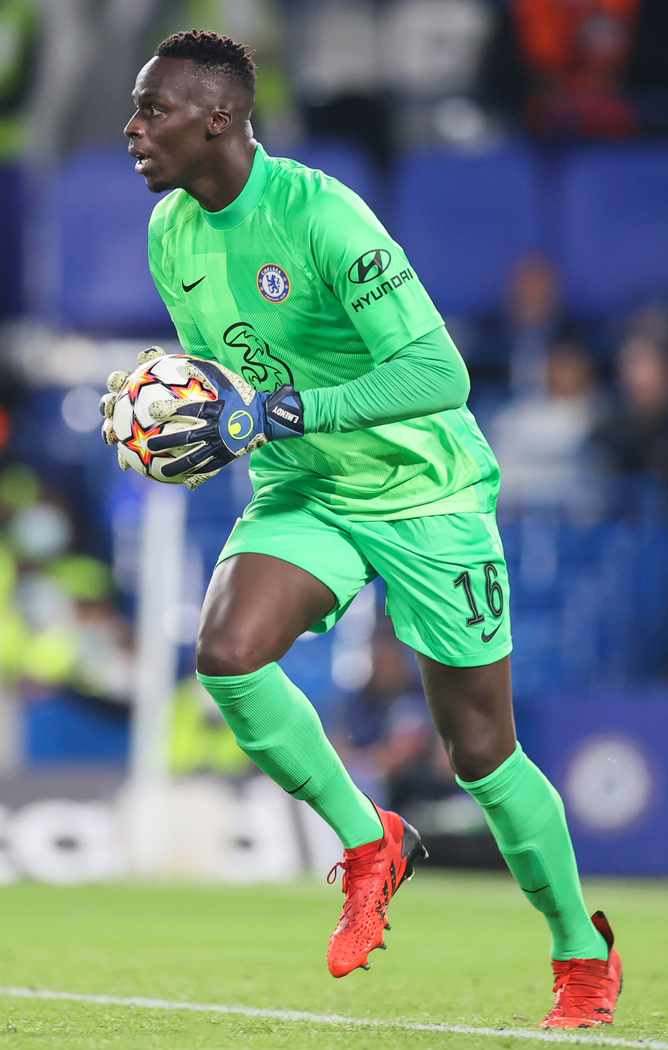
When the match resumed, Senegal goalkeeper Édouard Mendy saved Brahim Díaz’s penalty. Midfielder Pape Gueye then scored the only goal in extra time, giving Senegal their second continental title in three tournaments after their 2021 triumph in Cameroon.
The Royal Moroccan Football Federation (FRMF) protested. CAF’s disciplinary body initially rejected the complaint, but in March its appeal board ruled that Senegal’s walk-off fell under Articles 82 and 84 of the tournament regulations, which deal with teams that refuse to play or leave the field. Morocco were declared champions, which would have been their first AFCON title since 1976. Senegal’s federation (FSF) took the case to CAS, which heard both sides in Lausanne on 8 October.
What CAS decided, and why
According to the court’s statement, reported by ESPN, dpa and USA Today, the key issue was the role of the referee, Jean-Jacques Ndala of DR Congo. CAS said the decision to restart the game after the walk-off was his alone to make, and that by blowing his whistle he had judged that both teams were back on the pitch and willing to continue.
The panel found that Articles 82 and 84 are meant to settle a match only when a team’s conduct leads the referee to abandon the game for good. Because the final was completed, those rules did not apply, and CAS said Ndala “did not err in law” when he allowed play to resume. CAS also said the circumstances of the walk-off did not make the referee’s decision arbitrary.
The FSF welcomed the ruling, according to ESPN, while many Senegalese fans had continued to regard their team as the rightful champions throughout the appeal process.
Morocco vows to fight on
The Moroccan federation has rejected the outcome. Euronews and ESPN report that the FRMF says it will pursue every legal avenue available, and that it objected to CAS refusing its request to postpone the decision.
The FRMF has also alleged that there was contact between a member of the CAS panel and the president of the Senegalese federation about 48 hours before the verdict was issued. dpa reported that CAS had been asked to respond to the claim. The allegation has not been substantiated publicly, and CAS had not commented on it at the time of writing.
CAS rulings can be appealed to Switzerland’s Federal Supreme Court, but only on narrow procedural grounds, such as questions about the independence of an arbitrator or the right to be heard. The court does not normally re-examine the facts of a case, which makes a full reversal difficult.
What it means for African football
The saga has been an embarrassment for CAF, whose own bodies first rejected and then accepted Morocco’s protest before being overruled in Lausanne. The decision also reinforces a long-standing principle in football: the referee has final authority over whether a match continues, and competition rules cannot easily be used afterwards to overturn a result that was completed on the pitch.
For Morocco, who hosted the tournament and have invested heavily in stadiums ahead of co-hosting the 2030 World Cup, the ruling is a painful setback. For Senegal, it restores a title their players never accepted losing.
What happens next
Attention now turns to whether Morocco files a challenge in the Swiss courts and how CAF responds to having its appeal board overturned. The next Africa Cup of Nations is due to start in June 2027, co-hosted by Kenya, Uganda and Tanzania.
Nigeria’s Super Eagles, meanwhile, still face a difficult road to that tournament. After a 0-0 draw with Tanzania in Zanzibar last week, they sit three points behind Guinea-Bissau in Group L, with qualifying resuming in March 2027.
Sources: ESPN/Associated Press, CNN, Euronews, dpa (via Yahoo Sports), USA Today, Playmakerstats.