

President Bola Tinubu has asked the National Assembly to scrap and re-pass Nigeria’s 2026 budget, proposing to trim total spending by about N3.15 trillion with barely five weeks left in the fiscal year. The revised plan, however, leaves the government’s deficit and borrowing targets untouched, and on the same day the Senate approved a multi-billion-dollar external borrowing programme.
The request was contained in a letter dated November 20, 2026, which was read on the floor of both the Senate and the House of Representatives on Tuesday, according to Daily Trust and ThisDay.
What the revised budget proposes
Under the new framework, aggregate federal expenditure would fall from the N68.323 trillion approved earlier this year to N65.176 trillion, a reduction of roughly 4.6 per cent. Projected federal revenue, including earnings from government-owned enterprises, is put at N33.72 trillion, while capital spending is set at N26.23 trillion.
The fiscal deficit stays at about N31.46 trillion, equal to 5.64 per cent of GDP. Planned new borrowing also remains at N29.22 trillion, split into N18.43 trillion from domestic sources and N10.79 trillion from foreign lenders.
According to the President’s letter, as reported by Daily Trust, the adjustment is meant to align the budget with available resources and existing obligations. ThisDay reported that the changes would regularise spending already carried out by the Nigerian National Petroleum Company Limited (NNPCL) on behalf of the federation, cover debt-service obligations that were under-provided, and recognise capital warrants that have already been issued. Tinubu also listed road completion, support for farming and interventions on water-related risks among the priorities kept in the revised plan.
The President said a proposed $7.7 billion external loan, worth about N10.37 trillion at an exchange rate of N1,346.50 to the dollar, would fund the existing foreign-borrowing provision and would not enlarge the overall borrowing envelope.
Senate fast-tracks the bill and approves borrowing plans
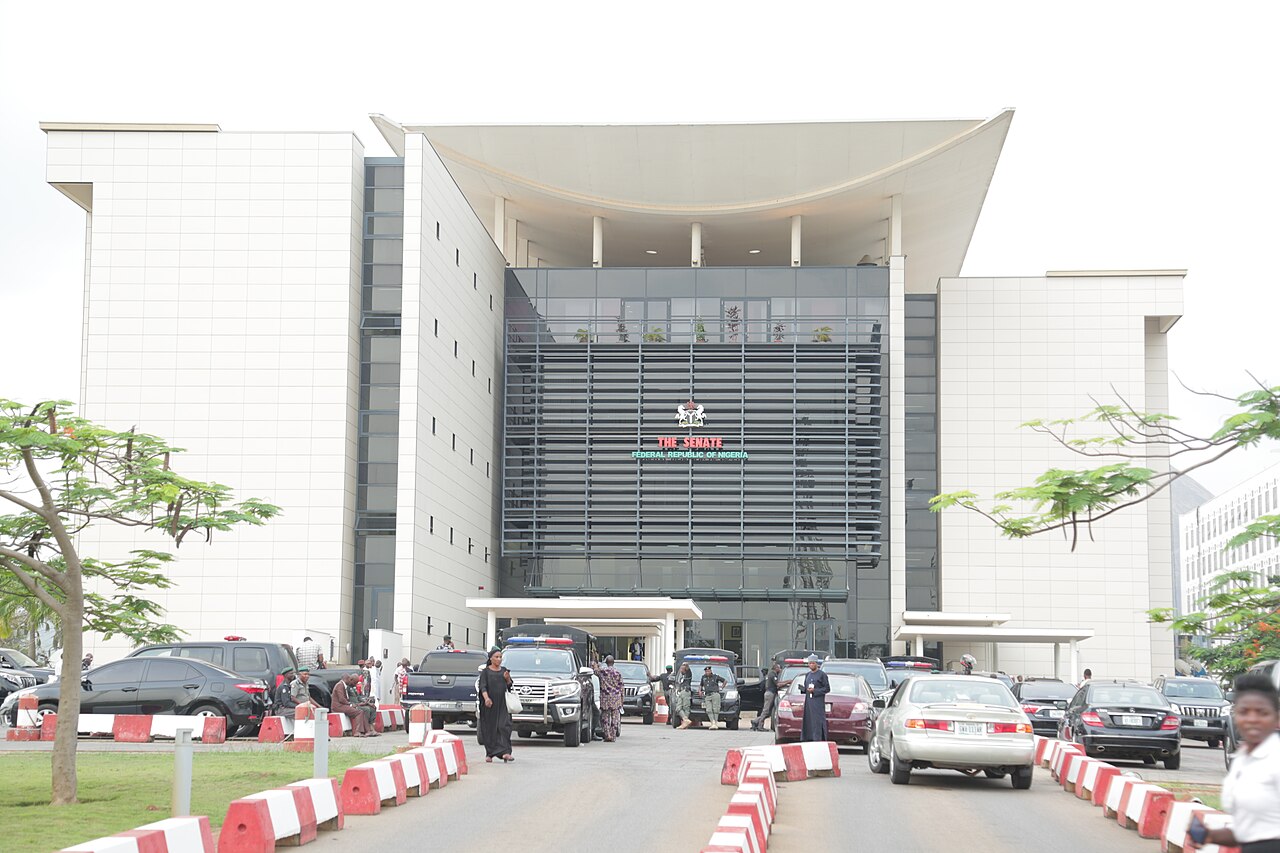
ThisDay reported that the Senate suspended some of its rules to speed up consideration of the request and passed the bill for second reading after a closed session of about 30 minutes. Senate Leader Opeyemi Bamidele argued that quick passage was needed so the government could settle outstanding obligations before the fiscal year ends on December 31.
The chamber then adjourned plenary until December 1 to allow its Appropriations Committee to finish work on the proposal. Senate President Godswill Akpabio urged senators, especially members of that committee, to pause their election campaigns and focus on the budget.
In separate votes, senators adopted a report of the Committee on Local and Foreign Debts approving the 2026–2027 Supplementary External Borrowing Rolling Plan of about $20.52 billion and €1.05 billion. They also authorised additional external borrowing of about N10.79 trillion to finance the deficit already provided for in the 2026 Appropriation Act.
Deputy Senate President Barau Jibrin defended the loans, saying Nigeria’s debt-to-GDP ratio of about 35 per cent could rise to roughly 42 per cent, which he said was still well below a 70 per cent threshold. He added that the larger rolling plan would not be drawn down immediately and would also cover the needs of state governments. Appropriations Committee chairman Solomon Adeola backed the requests but called for tighter oversight of how borrowed money is spent.
Economists question the timing
The proposal has drawn criticism from analysts who spoke to Daily Trust. Economist Marcel Okeke questioned why the government was only now realigning spending with its resources so close to the end of the year, and raised concern that the 2027 budget process appeared to be running late.
Professor Ndubisi Nwokoma described the practice of running several budgets at the same time as fiscal indiscipline and urged the government to close out older budgets and present the 2027 proposal promptly. Another economist, Dr Muhammad-Bashir Yusuf of Al-Hikmah University, Ilorin, noted that revenue would cover only about half of the revised spending, and said a cut in borrowing, rather than in spending alone, would have done more to ease the debt burden.
Background: a budget that kept changing
Tinubu first presented a N58.47 trillion 2026 budget proposal to lawmakers in December 2025. In March 2026 he asked them to raise it by N9.81 trillion, and he signed the enlarged N68.32 trillion budget into law in April. The latest request reverses part of that increase while keeping the borrowing plan that underpinned it.
The move comes as the Central Bank of Nigeria on Tuesday held its benchmark interest rate at 23 per cent, citing five straight months of easing inflation but warning that festive and election-related spending could push prices up.
What happens next
The Senate Appropriations Committee is expected to report back when plenary resumes on December 1, after which the bill would go through third reading and harmonisation with the House of Representatives before being sent to the President for assent. With the fiscal year ending on December 31, lawmakers have only a few weeks to complete the process, while attention will also turn to when the executive presents the 2027 budget.
Sources: Daily Trust, ThisDay, The ICIR, Vanguard, Premium Times.