

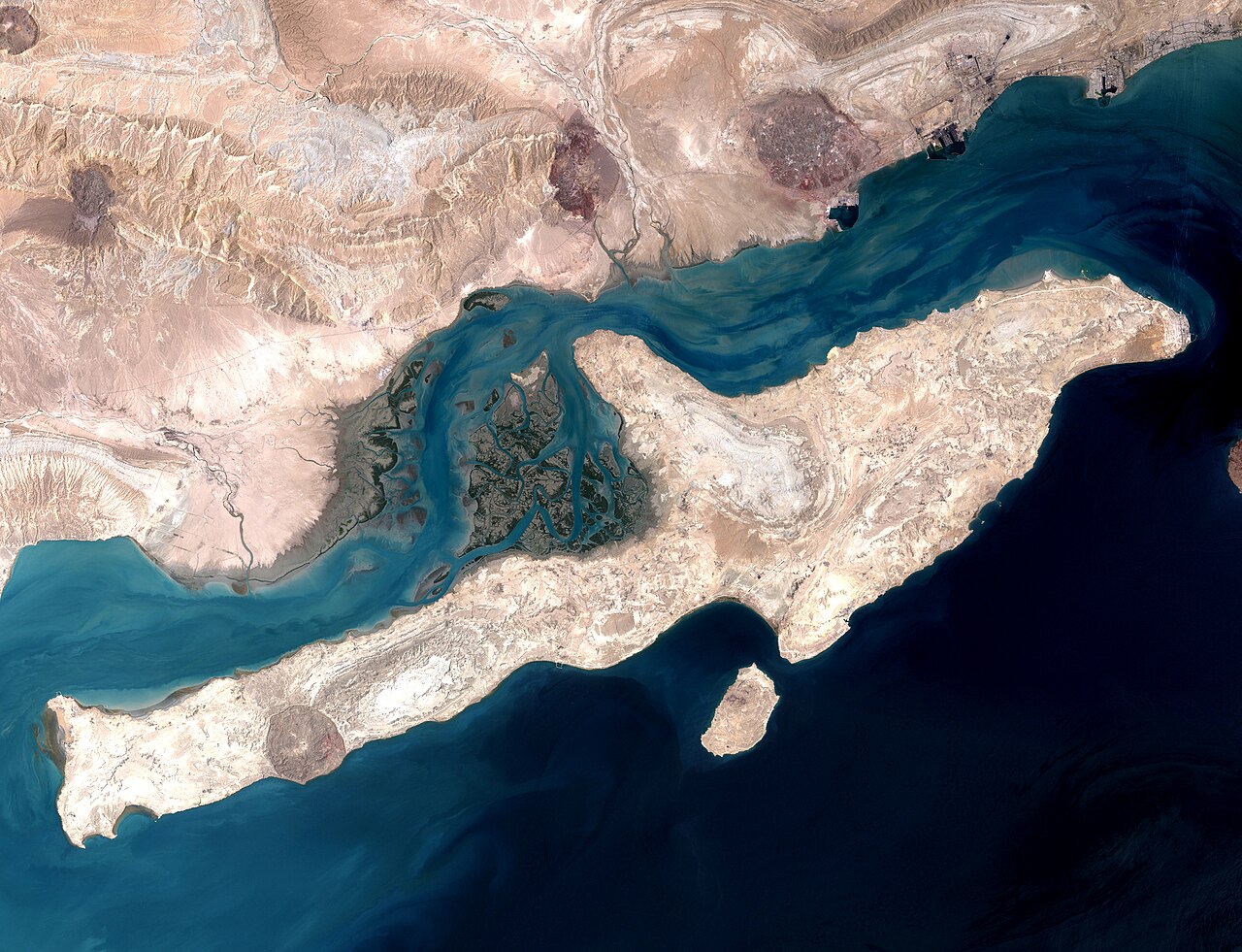
The United States carried out fresh airstrikes on Iran on Tuesday, hitting a missile launch site belonging to the Islamic Revolutionary Guard Corps (IRGC) on Qeshm Island in the Strait of Hormuz. US officials described the action as retaliation and self-defence against Iranian attacks on American forces in the region.
A US military official told USA Today that a US fighter jet used precision munitions against the site, in response to “Iranian aggression against U.S. assets and personnel in the region.” CNN also reported that the strikes were carried out in self-defence, while the Washington Examiner said several IRGC missile launch sites on the island were hit.
Iran Confirms Strike on Qeshm
An Iranian provincial official, Ahmad Nafisi, deputy governor of Hormozgan Province for political and security affairs, confirmed soon afterwards that the strikes had taken place, according to the Washington Examiner. No details of casualties or damage had been released by either side at the time of writing.
Qeshm is Iran’s largest island and lies in the narrow Strait of Hormuz, through which a large share of the world’s seaborne oil passes. The Washington Examiner said Tuesday’s attack was the third confirmed US strike on targets on the island this month. USA Today reported that the US also struck Qeshm on the eve of the US midterm elections, in an operation aimed at stopping Iran from using surface-to-air missiles against American forces.
Iranian Drones Target Bahrain
The strikes came on the same day that Iranian drones were launched towards Bahrain, home to the US Navy’s Fifth Fleet, according to ABC News. The US Central Command said the drones were intercepted with no damage to US equipment and no injuries to American personnel. The IRGC said it had targeted a US radar system at Sheikh Isa Air Base. ABC reported it was the third Iranian strike on Bahrain in a week.
A day earlier, the UK Maritime Trade Operations centre reported that a tanker passing through the Strait of Hormuz had been attacked north of Khasab, Oman, leaving it disabled with a fire in its engine room. The crew were reported safe. It was not immediately clear who carried out that attack.
A War Stuck Between Fighting and Talks
The United States and Israel launched their war on Iran on 28 February with strikes that killed Iran’s Supreme Leader, Ayatollah Ali Khamenei, along with other senior officials. Intense fighting has eased in recent months, but the two sides continue to exchange limited strikes, and the US is enforcing a naval blockade of Iranian ports, according to USA Today and ABC News.
Talks remain stalled despite a memorandum of understanding signed in June aimed at ending the war. President Donald Trump said last week that the US does not need a deal with Iran, and he removed Vice President JD Vance from leading peace negotiations, USA Today reported. At least 23 US service members have been killed and 865 wounded since the war began, according to US military figures cited by the paper. A third US aircraft carrier, the USS Theodore Roosevelt, arrived in the region on 15 November.
Why It Matters for Nigeria
The conflict has a direct impact on global oil prices, and any disruption in the Strait of Hormuz can quickly affect crude prices, Nigeria’s oil revenue and the cost of fuel and transport. Nigerians living and working in Gulf countries such as Bahrain, Kuwait and the United Arab Emirates are also exposed to the risk of further attacks.
What Happens Next
It is not yet clear whether Iran will respond to Tuesday’s strikes, or whether the latest exchange will lead to a wider escalation. With the US strengthening its naval presence and talks frozen, there is no sign yet of an end to the cycle of limited strikes and counter-strikes.
Sources: USA Today, CNN, Washington Examiner, ABC News, UKMTO.