


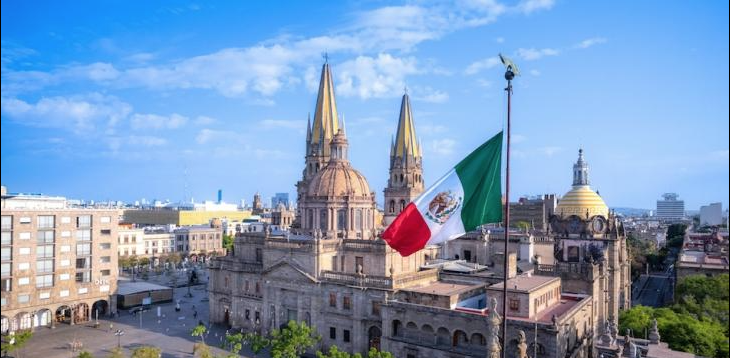
Mexico City 2026: Booming Tourism Meets Rising Tensions
January 24, 2026 – Mexico’s capital is having a moment, but it’s complicated. Record tourism, luxury hotel openings, and World Cup preparations collide with sovereignty concerns and a housing crisis that’s pricing out locals.
U.S. Military Raises Alarms
When images of a U.S. military transport plane at Toluca airport surfaced on social media, Mexico City residents immediately worried about sovereignty violations. President Claudia Sheinbaum moved quickly to clarify that it was just a logistics operation for training purposes, with written U.S. assurances that no military flights would occur over Mexican territory.
The nervous reaction makes sense. With Trump administration officials discussing potential military action against cartels and recent U.S. operations in Venezuela, Mexicans are on high alert. Sheinbaum’s message is clear: cooperation, sovereignty violations absolutely not.
Tourism Explodes 150%
While political tensions simmer, Mexico City’s tourism is exploding. Bookings are up 150% year-over-year, driven by the 2026 FIFA World Cup, new luxury hotels like Park Hyatt and Pendry Mexico City, and the city’s increasingly trendy reputation.
“Mexico City has been building momentum for years, but right now it feels like it’s hitting a true inflection point,” says Henley Vazquez of luxury travel company Fora.
Roma Norte and Condesa remain the hottest neighborhoods, but they’re no longer the bargain destinations they once were.
The tourism boom has triggered a housing crisis. Rents have jumped 9% in the past year, significantly outpacing inflation. A typical 2-bedroom apartment now rents for around MXN 20,600 ($1,150) monthly, with renovated units in Roma Norte and Condesa selling for MXN 4.5 million to MXN 14 million ($251,000 to $782,000).
Properties near Metro stations command a 10-20% premium, adding MXN 1,500 to MXN 3,500 to monthly rents. Digital nomads and remote workers from the U.S. are driving much of the demand, fundamentally changing the character of historic neighborhoods.
Ambitious Infrastructure Plans
Mexico City is planning what officials claim will be the world’s longest urban cable car line, a new Cablebús route spanning the capital’s western edge. The project aims to connect hillside neighborhoods to the Metro network while reducing traffic congestion.
If completed as planned, it would surpass current systems in La Paz and Medellín as the world’s longest urban cable car.
The Balancing Act
Mexico City in 2026 is a city of contradictions. It’s never been more popular internationally or more expensive for locals. World Cup preparations accelerate while geopolitical tensions with the U.S. remain high. Luxury hotels open as working-class neighborhoods gentrify rapidly.
For visitors, CDMX offers world-class dining, culture, and nightlife at prices that still beat New York or Los Angeles, even if the days of dirt-cheap tacos are fading in trendy areas.
For residents, the challenge is preserving what makes Mexico City special while managing explosive growth, foreign investment, and the constant tension of living next to a powerful neighbor with an unpredictable administration.
The world is watching Mexico City in 2026. The question is whether the city can handle the attention without losing itself in the process.