


Middle East Conflict Escalates as Iran Retaliates Against U.S. Allies
Iran Expands Conflict, Launches Attacks on Bahrain and Kuwait After Fresh U.S. Airstrikes
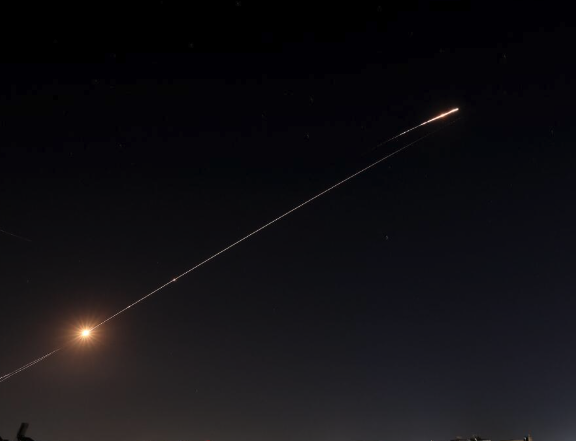
The conflict between Iran and the United States entered a dangerous new phase on Tuesday after Iran launched coordinated missile and drone attacks targeting U.S.-linked military sites in Bahrain, Kuwait, and Jordan, just hours after American forces carried out another wave of airstrikes against military targets in southern Iran.
According to Iranian state media and statements from the Islamic Revolutionary Guard Corps (IRGC), the attacks were carried out in retaliation for overnight U.S. strikes that targeted Iranian military command centers, missile launch facilities, air-defense systems, and drone infrastructure. The United States said the operation was part of its continuing response to attacks that have killed American service members and threatened maritime security in the Gulf.
Bahrain, Kuwait and Jordan Activate Air Defenses
Authorities across the Gulf moved quickly to activate air-defense systems as incoming missiles and drones were detected.
Jordan confirmed that its military intercepted several Iranian drones before they reached their intended targets, while Bahrain and Kuwait heightened security around military installations and critical infrastructure. Iranian media claimed that U.S. military facilities and support infrastructure were successfully targeted, although several of those claims had not been independently verified at the time of publication.
Military officials continue to assess the extent of the damage and whether there were casualties at the affected installations.
Strait of Hormuz Remains a Global Flashpoint
The latest escalation also extended to one of the world’s most strategically important waterways.
A commercial tanker reported being struck by an unidentified projectile while transiting the Strait of Hormuz, forcing the crew to abandon the vessel. Separately, Iran claimed that explosions involving oil tankers occurred in the area, further increasing concerns over the safety of international shipping.
Roughly one-fifth of the world’s oil supply passes through the Strait of Hormuz, making any disruption there a major concern for global energy markets.
Oil Markets React to Rising Tensions
Despite reports of renewed diplomatic efforts, investors remain concerned that continued military exchanges could disrupt crude oil exports from the Gulf.
Oil prices remained volatile throughout Tuesday as traders weighed the possibility of additional attacks on energy infrastructure against hopes that diplomatic mediation could eventually reduce hostilities.
Economists warn that a prolonged conflict could lead to:
- Higher global oil prices
- Increased fuel costs
- Supply chain disruptions
- Greater uncertainty in financial markets
Diplomatic Efforts Continue Despite Fighting
Even as military operations intensify, diplomatic channels have not completely closed.
Pakistan has continued efforts to encourage dialogue between Washington and Tehran, while reports indicate both sides remain interested in preventing the conflict from expanding into a broader regional war. However, recent attacks have severely strained earlier attempts to establish a temporary ceasefire.
Regional leaders have also expressed concern that additional attacks could draw more countries into the conflict and further destabilize the Middle East.
Global Leaders Watching Closely
Governments across Europe, Asia, and the Middle East are monitoring developments closely as fears grow that continued escalation could threaten international trade, energy security, and regional stability.
Security analysts say the coming days will be critical in determining whether diplomacy can prevent a wider conflict or whether military operations will continue to expand across the Gulf.
Why This Story Matters
The latest exchange marks one of the most significant escalations between Iran and the United States in recent months. With attacks now affecting multiple Gulf nations and vital shipping routes, the conflict has become an issue of global economic and geopolitical importance.
Any prolonged disruption in the region could have far-reaching consequences for oil markets, international trade, airline operations, and diplomatic relations.
Sources
- Reuters
- Associated Press (AP)
- ABC News
- The Guardian
Reuters: https://www.reuters.com/world/middle-east/iranian-forces-target-bahrain-kuwait-after-us-hits-irans-south-2026-07-21/
AP News: https://apnews.com/article/1664f6a4dad005a99771b2ad15213585
ABC News: https://www.abc.net.au/news/2026-07-08/three-tankers-struck-in-strait-of-hormuz/106891128