


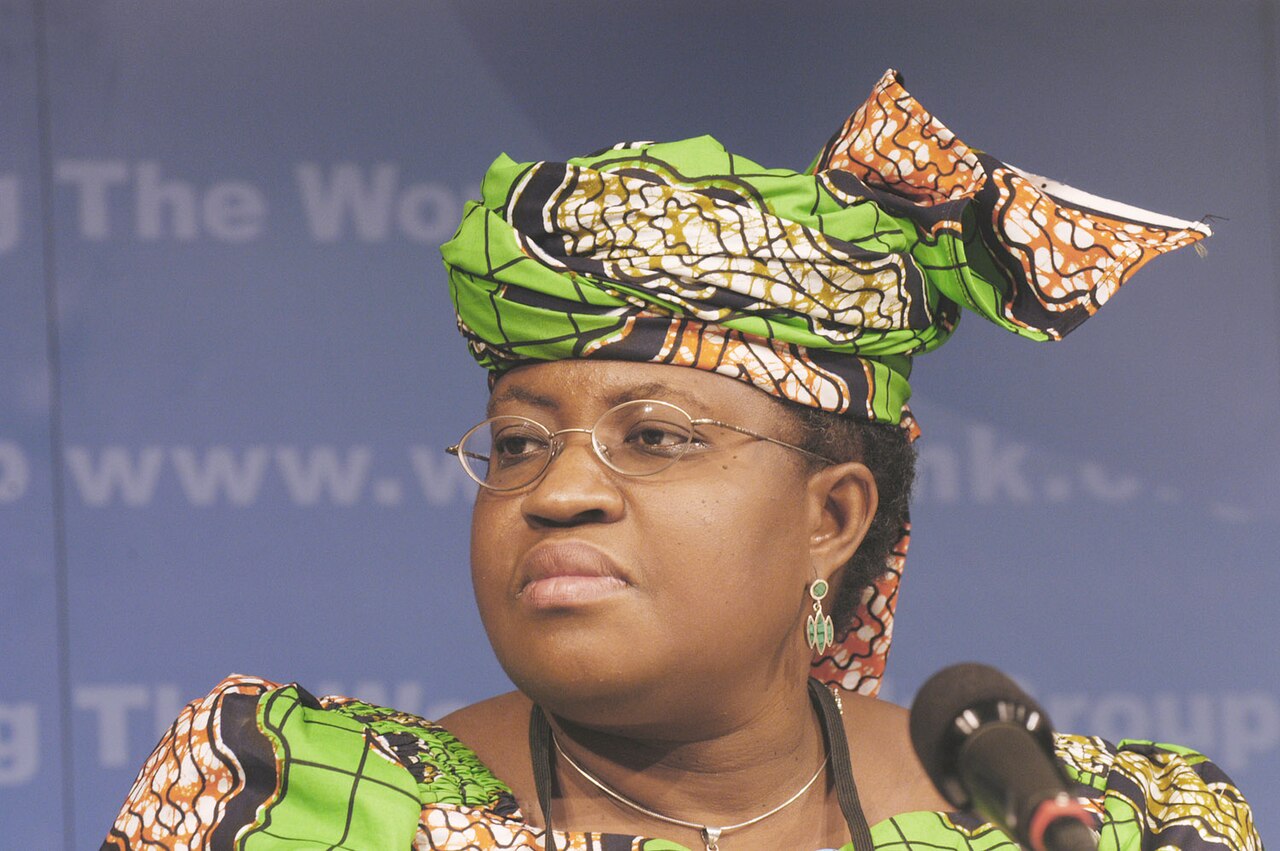
World Trade Organization Director-General Ngozi Okonjo-Iweala has spoken again about the darkest chapter of her time in government. She says the 2012 kidnapping of her mother was retaliation for her move to stop about $2.4 billion in fraudulent fuel subsidy payments.
The former Nigerian finance minister made the remarks in an interview with Bloomberg’s Francine Lacqua on the Leaders programme, published this week. Her account has drawn a sharp challenge from activist and politician Omoyele Sowore, who is demanding evidence for her claims.
“Something is going on here”
Okonjo-Iweala was finance minister under former President Goodluck Jonathan. She said her office noticed an unusual rise in subsidy claims from oil marketers.
“So I went to the president and said, look, something is going on here. Could we audit the accounts?” she recalled. Jonathan approved the review. “And we found about $2.4 billion worth of fraud. So we refused to pay,” she said.
“If you are a country that is not that rich, every single penny counts,” she added.
The kidnapping
In December 2012, her mother, Professor Kamene Okonjo, then in her early 80s, was abducted from the family home in Ogwashi-Uku, Delta State.
“I was told that for her to be released, I should resign and leave the country,” Okonjo-Iweala told Bloomberg. “It was a terrible, terrible five-day ordeal. I think the worst in my life.”
She said her mother was held deep in a forest and escaped one night. “She’s still alive. She’s 96 now,” she said.
She described being torn between her family and her job: “Between my mother, having my mother alive and staying in a job, I would pick my mother any day.” But her father, she said, refused to bend. “He said, ‘We don’t give in to blackmail.’ And he said, you’ve got to carry on. You’ve got to go to work.”
“I never dreamt my parents could ever be touched in this way, that people would be that evil,” she added.
What was reported in 2012
The kidnapping was national news at the time. Then, as now, Okonjo-Iweala said the abductors told her mother she had been taken because of her policies on fuel subsidy payments.
Several details reported back then differ from the account she gives today. Nigerian media reported in 2012 that a ransom of about N10–11 million was paid. The army led the search and arrested dozens of suspects, most of whom were later released, and the police account of the case was never fully tested in court. Okonjo-Iweala also wrote about the episode in her 2018 book, Fighting Corruption Is Dangerous.
Sowore: “Where are the audit findings?”
On Sunday, Sowore, the African Action Congress (AAC) presidential candidate, questioned the account in a post on X. He said such claims “cannot simply be accepted or dismissed without evidence.”
He asked “who exactly did she discover was responsible for this multibillion-dollar subsidy fraud?” and which companies and individuals were involved. “Where are the audit findings, investigation reports and records of prosecution? What became of the investigations?” he wrote.
Sowore also demanded to know “what verifiable evidence establishes a direct connection between the alleged oil subsidy fraud and her mother’s kidnapping.” He said Bloomberg’s Lacqua “ought to have done due diligence” before accepting the story. He noted that, to his knowledge, Okonjo-Iweala has never publicly challenged the police account or called for a fresh, independent investigation.
Why it still matters
The fuel subsidy regime was one of Nigeria’s biggest drains on public money for decades. A 2012 House of Representatives probe found that more than N1 trillion had been lost to inflated and fake claims. The regime finally ended in 2023, when President Bola Tinubu declared that “fuel subsidy is gone.”
Many of the people behind the scandals were never convicted. That is why Okonjo-Iweala’s remarks have reopened an old wound, and why critics like Sowore are asking for names, records and accountability.
Okonjo-Iweala has not yet responded publicly to Sowore. Flashinfong will update this story if she does.