


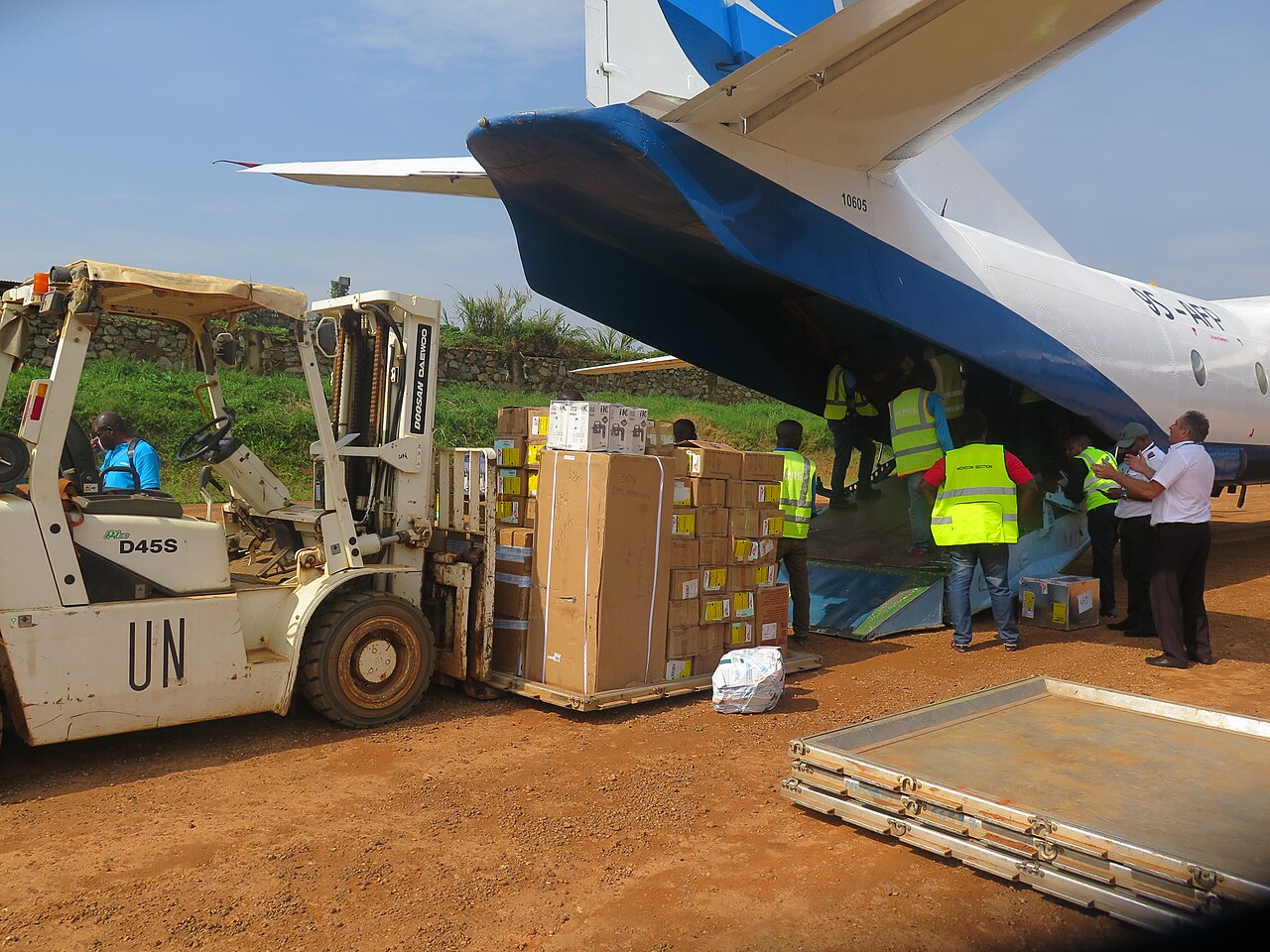
The Ebola outbreak in the Democratic Republic of Congo has crossed a grim milestone, with more than 5,000 people now confirmed dead. According to the latest figures released by Congolese health authorities on Saturday, 5,026 people have died out of 10,351 infections since the outbreak was declared in May, a fatality rate of almost 50 per cent.
The toll makes this the second deadliest Ebola outbreak in recorded history, behind only the 2014–2016 West Africa epidemic that killed about 11,000 people, the Associated Press reported. It is also the largest and deadliest Ebola outbreak Congo itself has ever faced.
What the latest figures show
The update, compiled by Congo’s National Institute for Biomedical Research (INRB), shows that 2,788 patients have recovered. The provinces of Ituri and North Kivu in the east remain the epicentre, accounting for 9,782 confirmed cases and 4,792 deaths.
The virus has now been recorded in 67 of Congo’s 178 health zones, spread across eight of its 26 provinces. Cases are still active in 50 of those zones, according to the AP. Health officials say this is the most geographically widespread Ebola outbreak the continent has seen, and the first to touch three African regions.
Dr Patrick Otim of the World Health Organization described the 5,000 mark as “a very tragic milestone,” stressing that every figure represents a life lost.
No vaccine for the Bundibugyo strain
The outbreak is caused by the Bundibugyo species of Ebola virus, which was declared on May 15 and caught authorities off guard. Unlike the more common Zaire strain, for which licensed vaccines and treatments exist, there is no approved vaccine or specific treatment for Bundibugyo. Health workers can only offer supportive care, such as fluids and treatment of symptoms.
That gap has made containment far harder. Africa CDC has said that about 80 per cent of new cases are coming from people who were not on any list of known contacts, a sign that transmission chains are being missed. The WHO has also noted that roughly one-third of recorded deaths happened outside treatment centres, often before patients were even tested.
Conflict, unpaid workers and funding gaps
The response is being slowed by insecurity in eastern Congo, where the M23 rebel group and the ADF insurgency near the Ugandan border limit where health teams can safely go. The AP reported that a nurse was killed last week, and that a ruling-party politician was killed in September after promoting health measures on local radio.
Pay is another flashpoint. Health workers have gone on strike several times over delayed wages. At the Tchomia treatment centre in Ituri, staff stopped work to demand four months of unpaid salaries. In Beni, a local elected official blamed a shortage of fuel and money from the central government for the continued rise in cases. Response chiefs in Ituri have appealed to striking staff to be patient while their demands are addressed.
Spread beyond Congo, including Nigeria
The outbreak has already crossed borders. Uganda reported cases earlier in the epidemic, and in October both Kenya and Nigeria confirmed infections. Kenya has recorded eight confirmed cases and two deaths. Nigeria’s only confirmed case, detected in Abuja, was evacuated to Switzerland for treatment, and Nigerian health authorities have been monitoring contacts with a target of declaring the country free of the disease in December.
Fears of wider spread across the continent are growing, given the large number of cases outside monitored contact chains and the heavy movement of people and goods through eastern Congo’s trade routes.
What happens next
Health agencies say the priorities are faster testing, better contact tracing and getting patients into treatment centres early, when supportive care gives them the best chance of survival. Aid groups working in the region say the outbreak is stretching responders and communities alike, and they are calling for steady funding and the timely payment of frontline workers.
For travellers and Nigerians with links to East and Central Africa, health authorities continue to advise watching for symptoms such as sudden fever, weakness, vomiting and bleeding after travel, and reporting to the nearest health facility or the NCDC immediately.
Sources: Associated Press (via PBS NewsHour), Congo’s National Institute for Biomedical Research (via Bastille Post), Africanews.