


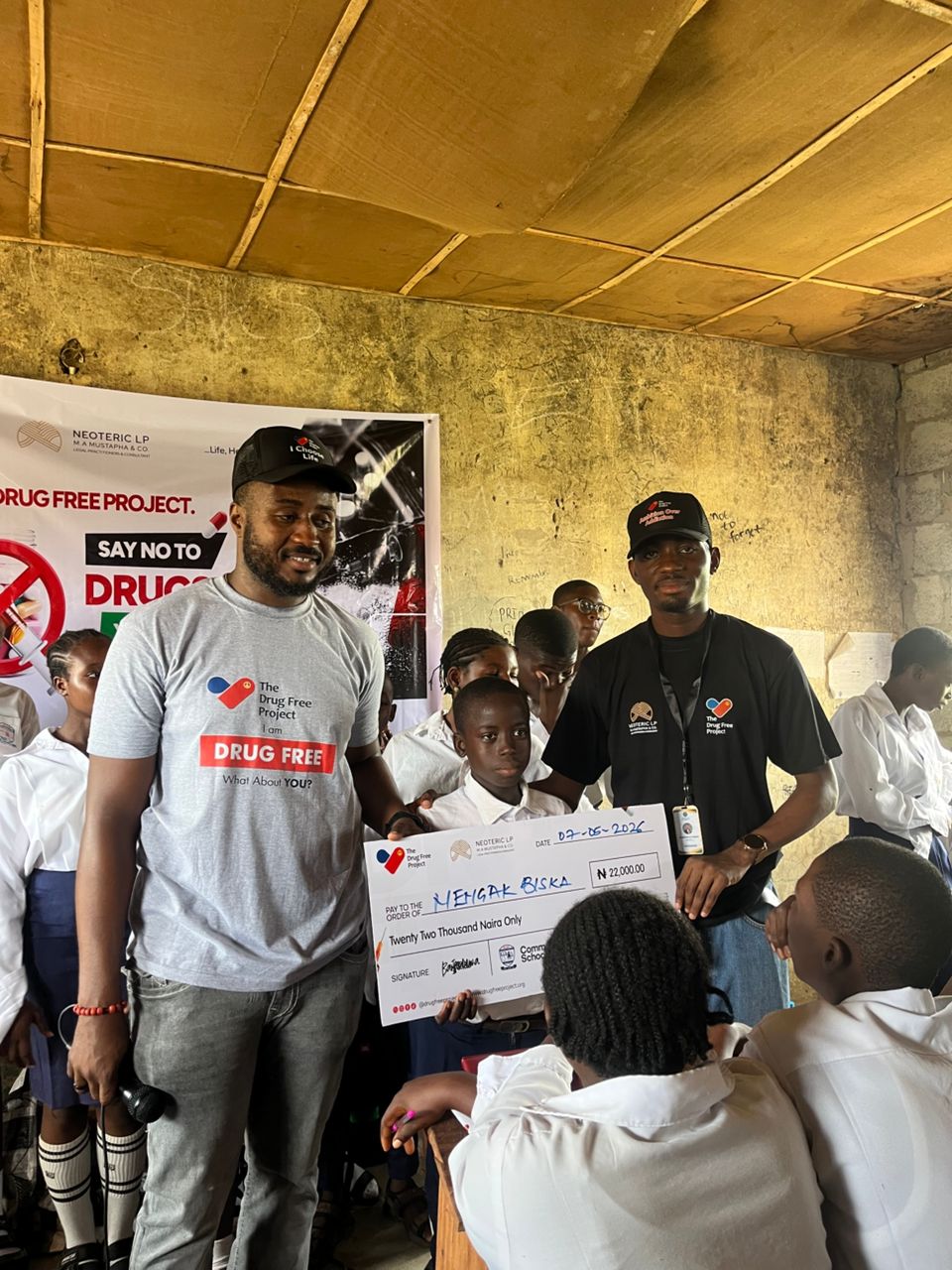
ABUJA, NIGERIA — Students of Kabusa Community Secondary School, Abuja, on Thursday experienced a different kind of school gathering as the Drug Free Project brought its anti-drug campaign to the community with a strong message against substance abuse, peer pressure, and youth addiction.
The outreach drew students, teachers, youth advocates, and development partners together in an atmosphere filled with honest conversations about purpose, discipline, and the growing dangers of drug abuse among young people.
The Drug Free Project team, led by its Deputy Chief Impact Officer, Mr. Olabode Olanusi, was joined by representatives of its corporate sponsor, Neoteric LP, alongside supporting partners including Solar Connect, Ocean Consultancy Services Limited, and Sardeep Consulting Limited.
After the school management formally welcomed guests and participants, Drug Free Project lead representative Mr. Olabode Olanusi , addressed the students, warning them not to allow temporary pressure, street influence, or the desire to “belong” destroy their future.
Speaking passionately during the session, Olanusi noted that many teenagers fall into drug abuse not because they are naturally wayward, but because they are misled, curious, emotionally vulnerable, or influenced by the wrong circle.
“You do not need drugs to belong,” he told the students. “The choices you make now can either protect your future or damage it. A lot of people started with ‘just once’ and today their education, relationships, and dreams are paying the price.”
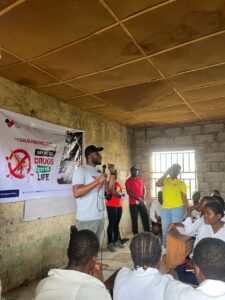
His remarks drew loud reactions from students, many of whom listened attentively throughout the programme.
The outreach featured a sensitisation talk themed “Choosing a Drug-Free Future,” where speakers discussed the effects of drug abuse on mental health, academic performance, behaviour, relationships, and long-term personal development.
Students were encouraged to avoid negative peer influence, speak up when under pressure, and seek help whenever they encounter emotional or social challenges.
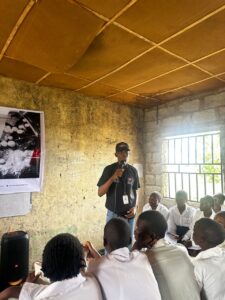
The atmosphere became even more engaging during the interactive session as students openly asked questions about peer pressure, social media influence, and the increasing exposure of teenagers to illicit substances.
Facilitators responded by emphasizing self-confidence, mentorship, positive friendships, and the importance of making informed decisions.
One of the major highlights of the event was the presentation of scholarships to selected students based on academic promise, conduct, participation, and leadership potential.
The gesture was applauded by teachers and parents present at the event, who described it as both motivational and impactful for students from underserved backgrounds.
The outreach ended with a Drug-Free Pledge as hundreds of students stood together and publicly committed themselves to staying away from drugs and becoming positive examples within their community.
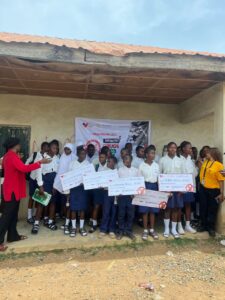
Teachers and guests at the event commended the initiative, describing school-based sensitisation programmes as one of the most practical ways to address the growing challenge of substance abuse among Nigerian youths.
According to the organisers, the Kabusa outreach forms part of a broader nationwide campaign aimed at taking anti-drug advocacy directly into schools and vulnerable communities while simultaneously creating opportunities for mentorship, education support, and youth development.
With growing concerns over youth drug dependency across different parts of the world, stakeholders at the event stressed the need for stronger collaboration among government agencies, international organisations, civil society groups, and private sector partners willing to invest in the future of young people.
In continuation of its advocacy efforts, the Drug Free Project also announced upcoming outreach visits to Army Day Secondary School, Asokoro, and selected Internally Displaced Persons (IDP) camps within Abuja.
According to the organisation, the initiative forms part of its broader commitment to promoting drug abuse prevention, mental wellness, educational support, and youth empowerment among vulnerable communities.
The organisation disclosed that the outreach programme will provide educational support materials including school fees assistance, school uniforms, bags, notebooks, colouring books, and other essential learning materials for students in need.
Through its Scholar Funding Programme, the Drug Free Project also aims to offer structured academic sponsorship to outstanding but underprivileged students to help them continue their education without interruption.
To support the execution of these initiatives, the organisation is calling on individuals, corporate organisations, and development partners to contribute toward the project.
> “No amount is too small,” the organisation stated. “Every contribution goes directly toward impacting lives, supporting education, and helping young people build a healthier and drug-free future.”
Donation and Partnership Information
Account Name: Drug Free Health Initiative
Bank: STANBIC IBTC
Account Number: 0073052769
Description: The Drugfree Project
The organisation reaffirmed its belief that sustainable youth development requires collective responsibility, proactive intervention, and stronger community support.
Ending the outreach on an inspiring note, organisers shared a message encouraging sacrifice, discipline, and long-term vision among young people and stakeholders alike:
> “He who aims to accomplish little sacrifices little; he who seeks to achieve much sacrifices much; he who strives for greatness sacrifices greatly.”